Pickup from your hotel and the short drive over the bridge, out past the Colossi of Memnon into the farmland behind them.
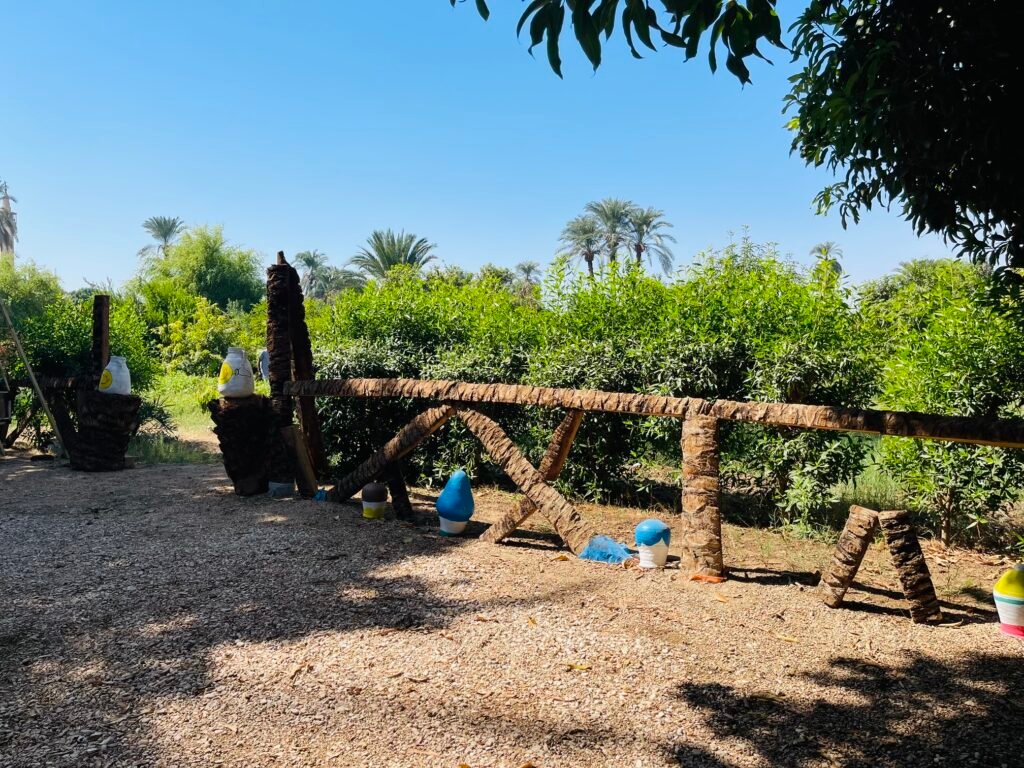
Most visitors cross to the West Bank for the tombs and are gone by lunch. The land between the temples is where people actually live, and it has been farmed the same way for a very long time: clover and sugar cane, a donkey, a water buffalo, a mud-brick house with a courtyard.
You spend a morning with one family. Depending on the season you might help cut clover, bake flat bread in a clay oven, feed the animals or press sugar cane. Nobody performs anything for you. Lunch is what the household eats — molokhia, rice, fresh bread, whatever the garden gave that week.
This is the day people tell us about afterwards, more often than the tombs.
Slower, or differently — always possible. Tell us how you like to travel and we will rebuild the day around it.
Pickup from your hotel and the short drive over the bridge, out past the Colossi of Memnon into the farmland behind them.
Whatever the day actually holds. Cutting clover for the animals, drawing water, tending the buffalo. You are welcome to join in or simply watch.
Flat bread is baked fresh every day in a domed mud oven. It is harder than it looks and better than anything you will eat in a hotel.
A home-cooked meal with the family, in the shade. No menu, no service, just what is on the table.
A slow return in the early afternoon, with a stop wherever something is worth stopping for.
Need help with booking? Send Us A Message