
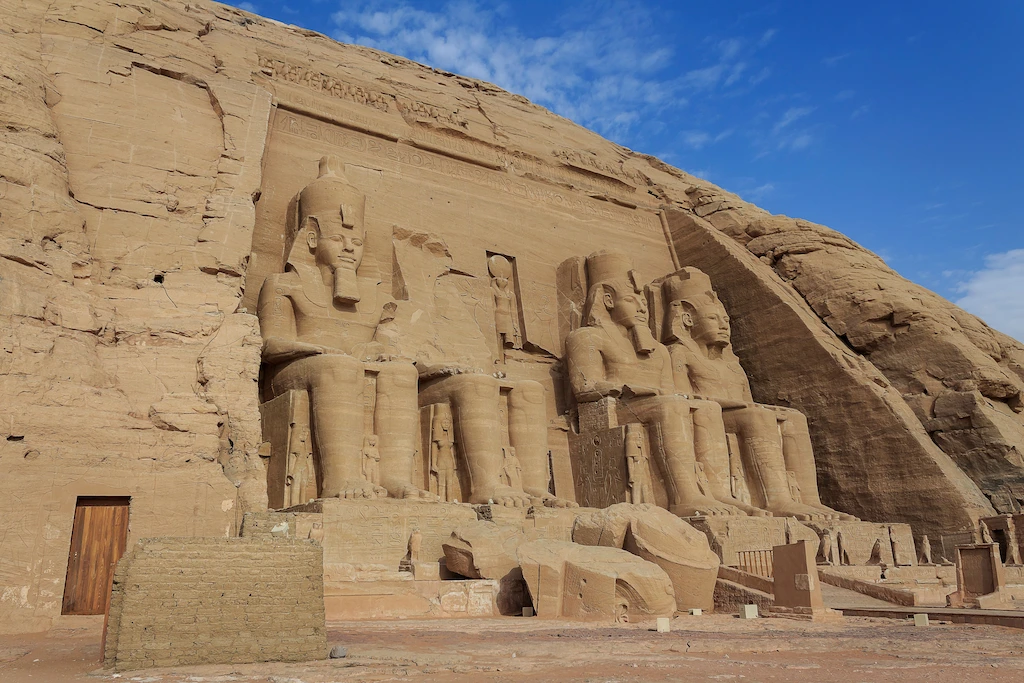
Abu Simbel lies about 280 kilometres south of Aswan, close to the border with Sudan. By road that is roughly three to four hours each way, so the day starts early. The alternative is a short domestic flight. What waits at the end are two rock-cut temples from the reign of Ramesses II – and one of the great rescue operations of the twentieth century.
What you see at Abu Simbel
The Great Temple is cut straight into the rock. Four seated colossi of Ramesses II, each around twenty metres tall, guard the entrance. Inside, a single axis leads from hall to hall into the sanctuary, where the king sits among the gods.
The Small Temple next to it is dedicated to the goddess Hathor and to Nefertari, the king’s principal wife. Unusually for Egypt, the queen stands on the facade at the same scale as the king.
Why the temples are not where they were built
When the Aswan High Dam was built in the 1960s, the rising waters of Lake Nasser threatened to drown both temples. UNESCO launched an international campaign. According to UNESCO, the temples were cut into more than a thousand blocks of around 30 tonnes each and reassembled 64 metres higher and 180 metres further inland. The new site was inaugurated in 1968.
Standing in front of the colossi you would hardly know. Inside, you can make out some of the joins – and that is what makes the place more than a temple. Since 1979, the Nubian monuments from Abu Simbel to Philae have been a UNESCO World Heritage site.
By road or by air
By road you leave early in the morning, drive south through empty desert and reach the temples in the morning, then return the same way to Aswan. That is how we plan Abu Simbel on our eight-day dahabeya journey, with a private guide and no rush on site.
By air, there are domestic flights from Aswan to Abu Simbel. Schedules change with the season. If you would like to fly, we check the connections for your dates and tell you whether the extra cost is worth it compared with the road.
If you want more calm, stay a night in Abu Simbel. You then see the temples in the evening or early morning, outside the hours when the day visitors are there.
The sun alignment in February and October
Twice a year, around 22 February and 22 October, the rising sun shines through the full length of the Great Temple into the sanctuary and lights the figures there. Only the figure of the god Ptah stays in shadow.
On those days Abu Simbel is very crowded and needs patience and early planning. If you want to travel for it, talk to us in good time. If the temples themselves are what you are after, a quiet day away from those dates is often the better choice.
Practical tips
- Go early. Mornings are cooler and the light on the colossi is better.
- Water, hat, sun cream. There is almost no shade in the desert around Abu Simbel. More in staying well in Egypt.
- Bring your passport. There are checkpoints on the road.
- Photography: site rules change from time to time. Ask on site before taking pictures inside.
- Best months: October to April is far more comfortable than summer – the best time to visit Egypt.
Frequently asked questions
How far is Abu Simbel from Aswan? About 280 kilometres, roughly three to four hours each way by road.
Is Abu Simbel worth a day trip? Yes, if you do not mind an early start. It is a long day, but the temples are among the most impressive places in Egypt.
When is the sun alignment? Around 22 February and 22 October, at sunrise.
Can you stay overnight in Abu Simbel? Yes. You then see the temples without the day-trip crowds.
The Orientoura team is always glad to help our guests with any questions.
Sources
Related: dahabeya or Nile cruise ship? and how much to tip in Egypt.