The currency is the Egyptian pound and you will need it in cash, every day, in small notes. Cards work in hotels and tourist restaurants and almost nowhere else. Change a small amount at the airport and draw the rest from a bank ATM.
Egypt is not a country you can travel cashless, and it is not one where you should walk around with a thick roll of notes either. What follows is where the line between those two sits.
The currency
You pay in Egyptian pounds (EGP, locally gineh). One pound is a hundred piastres, which you will never use. Notes are what circulate; some of the smaller denominations now exist as polymer as well as paper, which is confusing and means nothing.
One number you will not find on this page is the exchange rate. Egypt moved the pound off its fixed rate in March 2024, and it has moved substantially since. Any rate printed here would be wrong by the time you read it. Look it up on the day, and budget generously rather than tightly.
Card or cash, honestly
| Where | Card | Cash |
|---|---|---|
| Hotel bill | usually | also fine |
| Restaurant aimed at visitors | usually | also fine |
| Local eatery, street food | rarely | yes |
| Taxi, ferry, caleche | no | yes |
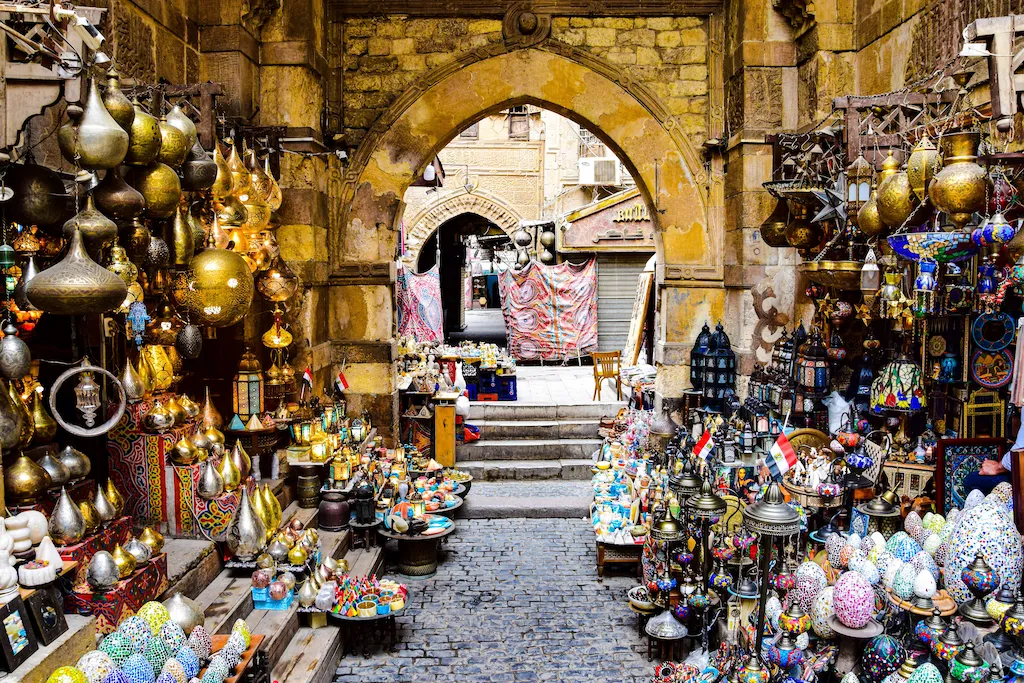
| Bazaar, market, small shops | rarely | yes |
| Tips | no | yes, small notes |
| Site entrance tickets | some card terminals now | yes |
The official wording is that paying by credit card is “usually possible in hotels and restaurants frequented by tourists”. Translated: anywhere a printed bill exists. Everywhere else, paper.
The same source recommends preferring cashless payment and carrying only what you need for the day. That is security advice rather than convenience advice, and it is sound.
Getting cash out
- Credit cards work at almost any machine.
- Debit cards work reliably at ATMs attached to banks. The machine in the hotel lobby or the supermarket is not necessarily one of those.
- Daily limits apply and are lower than you are used to. Plan on several withdrawals.
- Fees come twice, from your own bank and from the machine operator. When the ATM offers to bill you in your home currency, decline - that conversion is almost always the more expensive one.
Carry two cards from two different providers and keep them apart. A blocked card in Egypt is a minor nuisance; a blocked only card is not.
Changing money
Banks, licensed exchange offices and hotels all change money, and the rates differ. The airport is rarely the best of them - which is not a reason to change nothing there. You need small notes the moment you land, for porters and the first day. A small amount at the airport and the rest in town is the comfortable compromise.
Bring clean notes. Torn or heavily worn foreign notes are frequently refused. And keep the exchange receipts: changing pounds back at the end often requires them.
Small notes are the real problem
The practical bottleneck on an Egyptian trip is not money, it is denomination. Tips, the boat across the river, the man with the key to the tomb - these are all small amounts, and nobody has change for a large note.
The tip our guests most often say was the most useful: ask explicitly for small notes when you change money or at the hotel desk, and keep them in a separate pocket. Then you never dig through a wallet, and you never overpay simply because you had nothing smaller.
Tipping is part of daily life here. Your guide will tell you what is usual on the day if you ask, and nothing in our prices depends on it.
At the border
- Egyptian pounds: in or out only up to a set limit.
- Foreign currency: declare anything above the set value on arrival. Without the declaration you may not take it out again. The current amounts are published by the German Federal Foreign Office.
- Declaring is simple. If you are above the limit, declare the amount on arrival. It takes a couple of minutes and that is the end of it.
Passport, visa and health rules are covered separately in our guide to entry requirements for Egypt.
Frequently asked
Should I bring cash or use cards in Egypt?
Both, in that order. Cards work in hotels, larger restaurants and shops that serve visitors. Everything else - taxis, markets, the ferry, the man who unlocks the tomb, every tip - is cash. You cannot get through a day in Egypt without notes in your pocket.
Which currency should I bring to change?
Euros, pounds sterling or US dollars all change easily at banks and licensed exchange offices. Bring clean, undamaged notes: torn or heavily worn notes are often refused. Do not bring coins of any foreign currency - nobody will change them.
Can I use my debit card at ATMs?
Usually, but less reliably than a credit card. The German Federal Foreign Office notes that cash withdrawals with a credit card work almost anywhere, while debit cards work at bank ATMs. Bring two cards from two different providers and keep them in different places.
Is there a daily withdrawal limit?
Yes, and it is lower than you are used to. Expect to withdraw several times over a two-week trip rather than once.
Should I let the ATM convert to my own currency?
No. When the machine offers to bill you in pounds sterling or euros instead of Egyptian pounds, decline and let it charge in local currency. The machine’s own conversion rate is almost always the worse of the two.
How much cash can I bring into Egypt?
Egyptian pounds only up to a set limit. Foreign currency above a set value must be declared on arrival, and undeclared sums may not be taken out again. The current amounts are published by the German Federal Foreign Office.
What is the exchange rate?
Deliberately not stated here. Egypt moved to a flexible exchange rate in March 2024 and the pound has moved a great deal since. Any figure written on a travel page is out of date by the time it is read. Check on the day.
What do I do with leftover pounds?
Spend the small notes as tips, which is the easiest route. Larger amounts can be changed back at a bank, and the original exchange receipt is often asked for - so keep your receipts.
Where this comes from
Rates and fees move constantly, and the currency and withdrawal rules can change. What counts is the current advice of the German Federal Foreign Office on the day you travel.
- German Federal Foreign Office - Egypt travel and safety advice (payment, ATMs, currency regulations)
- Central Bank of Egypt (currency and exchange rate regime)
Given in good faith, without warranty.
On our trips
The more a trip includes, the less cash you need. On the dahabeya between Luxor and Aswan, full board, entrance fees, the Egyptologist and all transfers are in the price; what is left is drinks outside meals, tips, and whatever you buy for yourself. The same holds for the day trips: the day is paid for, the wallet is for a drink and a tip.
We tell you before you travel what will still come out of your pocket. We would rather you knew.
If you would rather not work any of this out yourself, a tailor-made trip can be priced to include exactly what you want covered upfront. The day trips from Hurghada work the same way: one price, agreed before you go.
Auf Deutsch lesen: Geld in Ägypten - Bargeld, Karte und Wechseln
Keep reading: The Grand Egyptian Museum: how long you need, and what to skip
Last checked: October 2026. Official rules on entry, fees and currency change from time to time. The authority here is the current travel advice of the German Federal Foreign Office. We review this page every quarter.