
The pharaonic trail
How old is molokhia, really? The honest answer: we don’t know exactly. The plant demonstrably grew in Egypt in pharaonic times. Whether it was eaten back then is disputed. Some sources claim the ancient Egyptians thought the plant was poisonous and called it khia (the evil one). Other sources document it being eaten in post-pharaonic times. The most likely version: the jute mallow leaves were known for thousands of years, but only became everyday food under Graeco-Roman and later Islamic rule. The name mlokhia derives from the Arabic molok (royal), a nod to the Fatimid era, when the dish became a favourite of the ruling class. Before the Fatimids it was probably more what you might call a “fasting herb”: a simple green that was easy to come by.Why al-Hakim banned the soup
On 7 Muharram in the year 395 after the Hijra, in October 1004, Caliph al-Hakim signed the ban. The official reason was medical: molokhia was said to be an aphrodisiac and harmful to public morals. The more likely reason is political. Molokhia was the favourite dish of Mu’awiya ibn Abi Sufyan, the first Umayyad caliph and bitter opponent of the Caliph Ali, whose descendants the Fatimids aligned themselves with. So the ban was a gesture against a historical figure al-Hakim hated, and at the same time a demonstration of how far a caliph’s power could reach into his subjects’ daily lives. Al-Hakim was notorious for decrees like this. He also banned eating fish, trading in honey, and women going out after sunset. Many of his laws were lifted after his death. The molokhia ban is still alive today, but only in one community: the Druze, for whom al-Hakim holds a central place in the faith, still don’t eat molokhia.How molokhia is made today
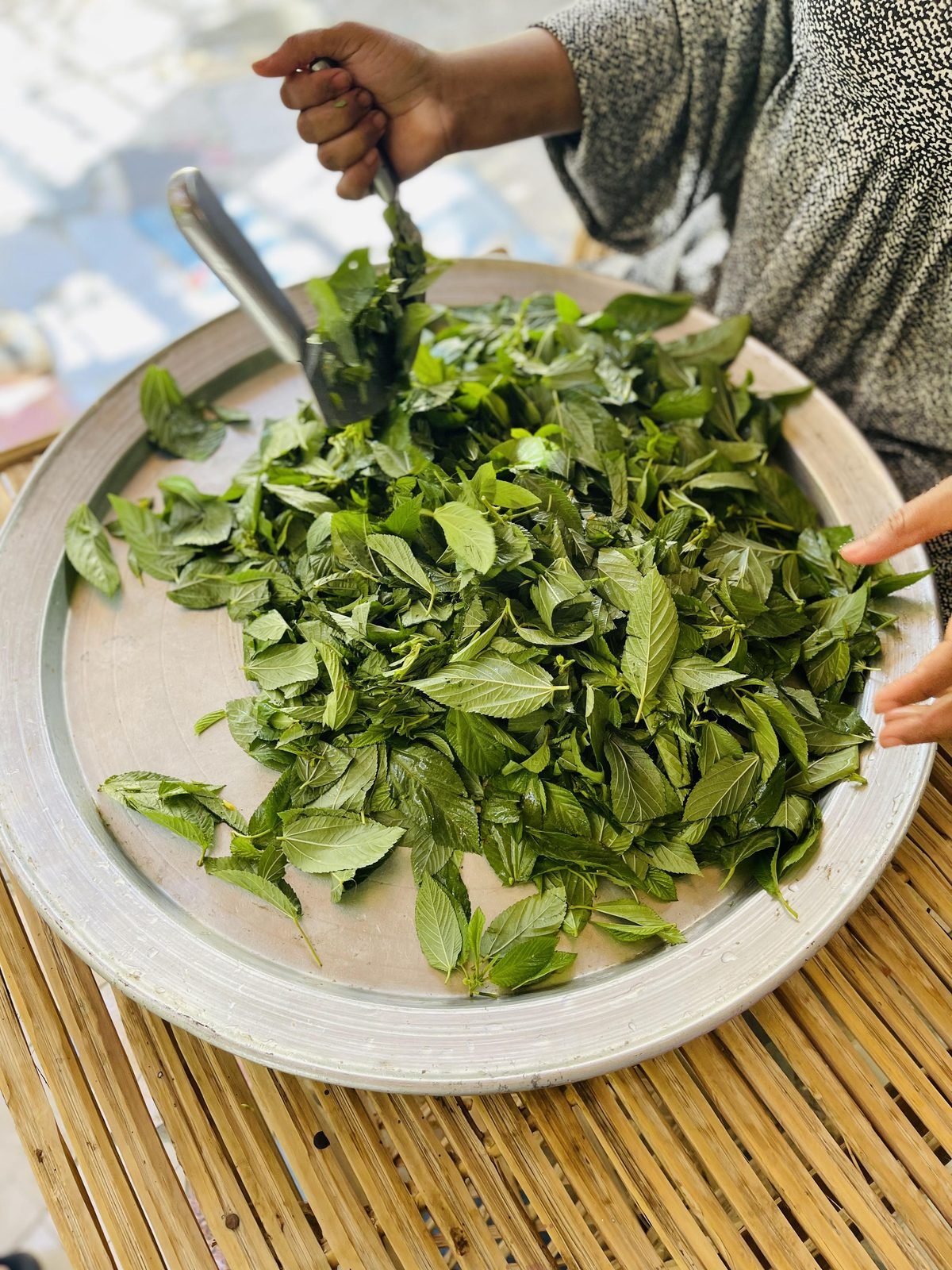
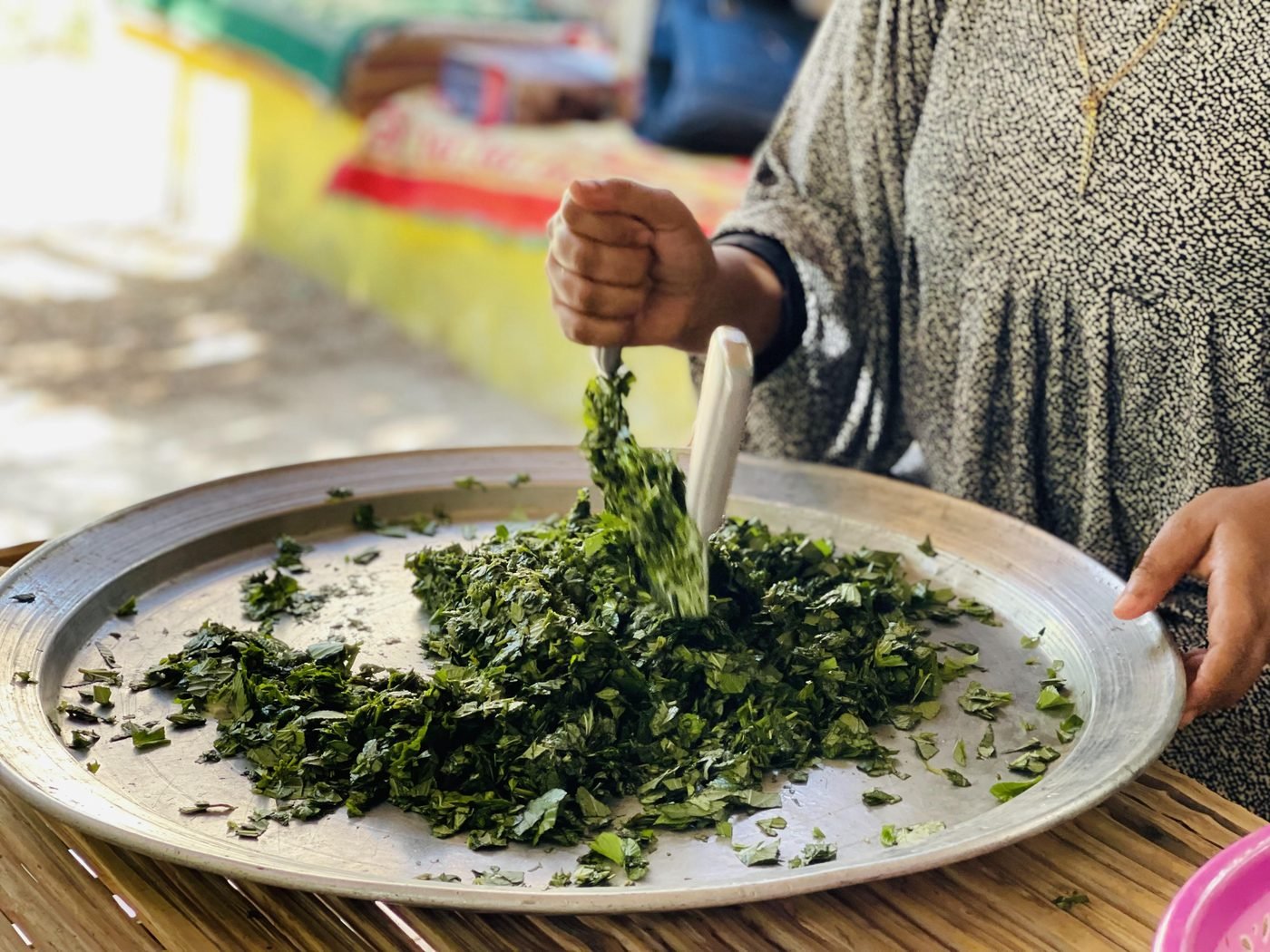
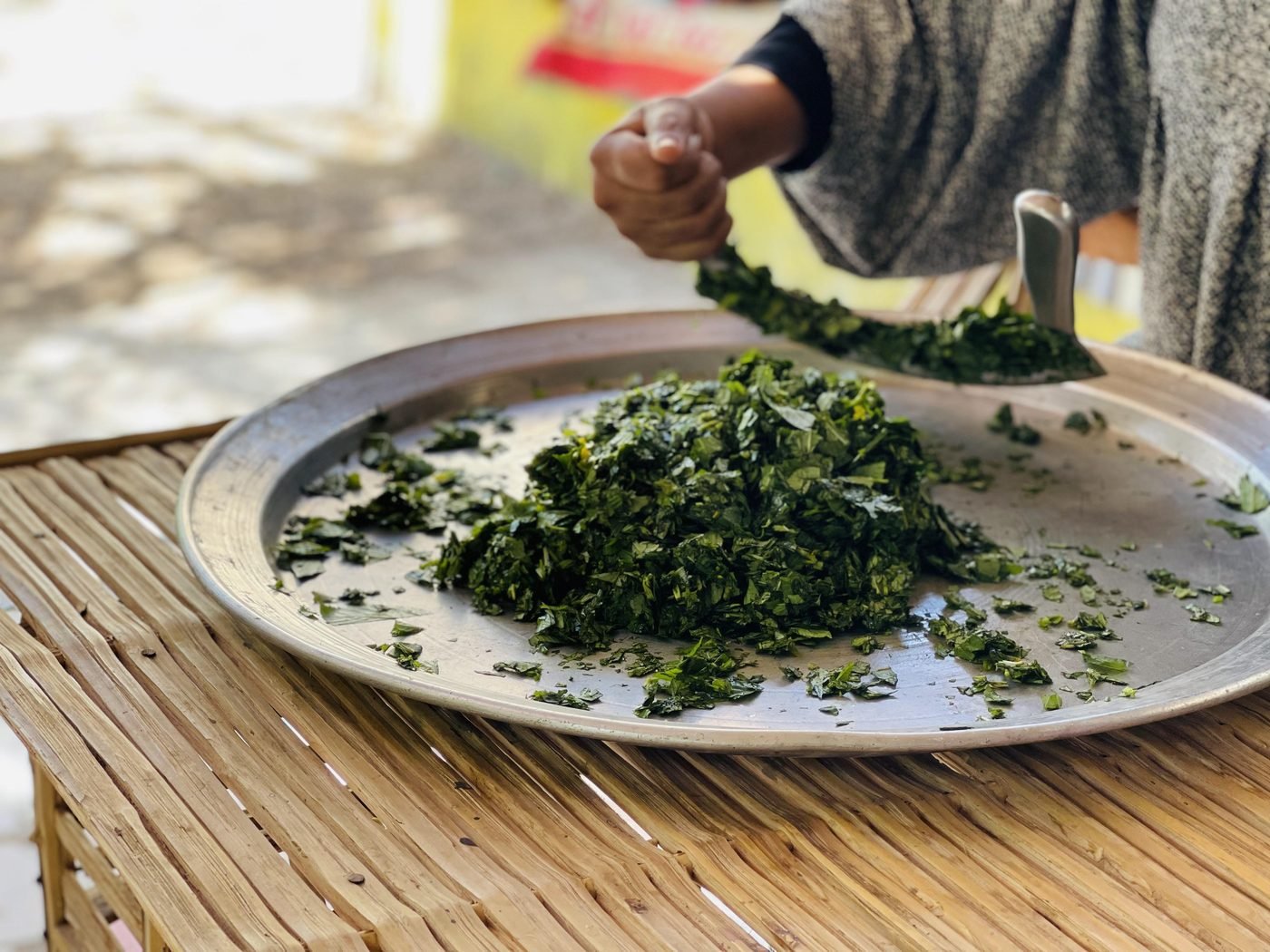
Making it is an art, and every family does it a little differently. The basic steps are:- Fresh molokhia leaves are plucked from the stalk, washed, and chopped with a special half-moon knife (makhrata) so finely that they almost become a paste. You can also buy it ready-chopped and frozen in Middle Eastern supermarkets abroad (in Germany, for instance). It’s an acceptable substitute, but not the same thing.
- A stock is made, classically from chicken or rabbit, sometimes from lamb. The stock has to be rich and is often cooked with whole spices (bay leaf, cardamom, a cinnamon stick).
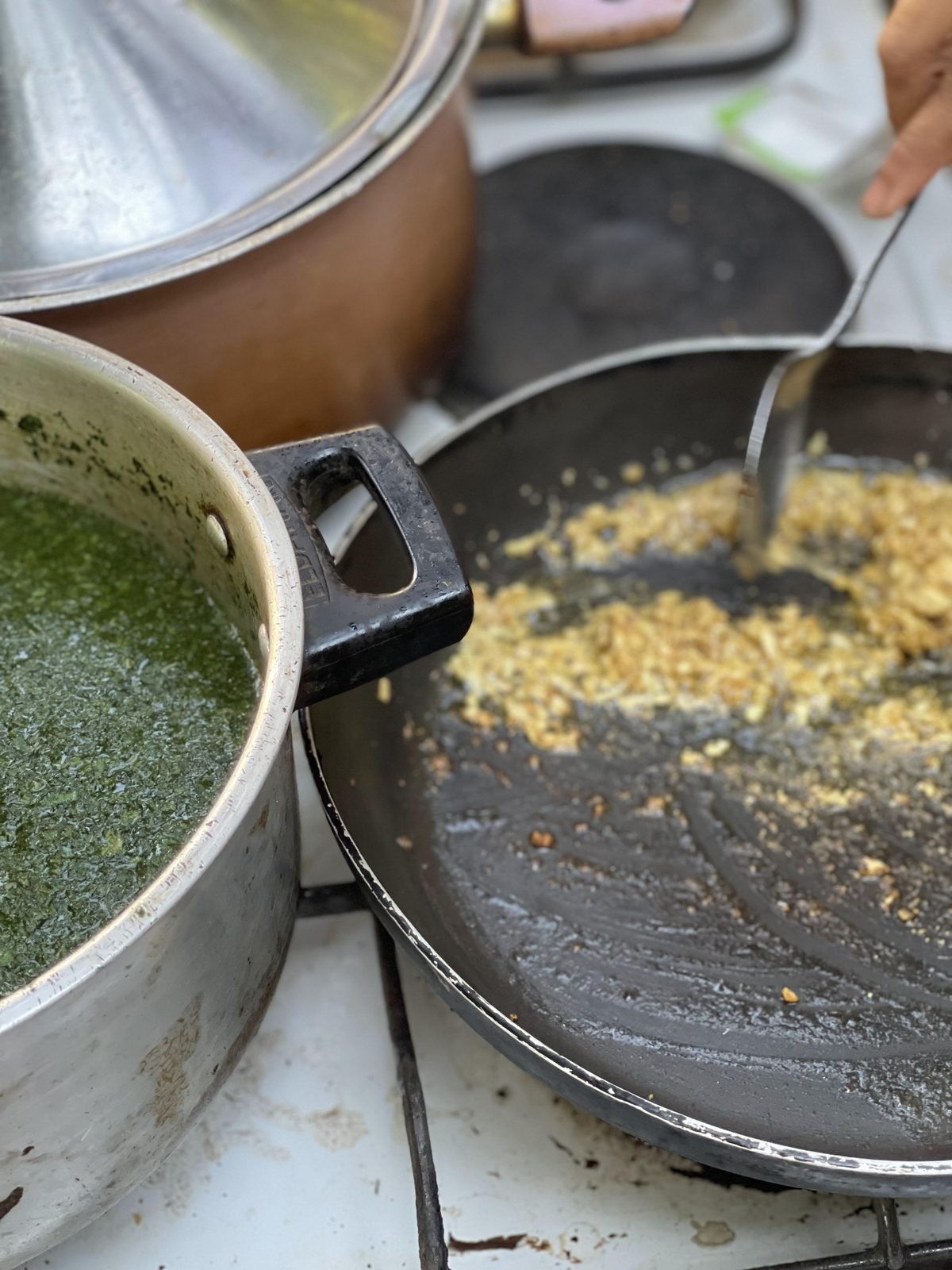
- Garlic and coriander are fried separately. This mixture is called ta’leya and it is crucial: it gives the soup its characteristic smell. A molokhia without a proper ta’leya is not a molokhia.
- The finely chopped leaves go into the simmering stock, the ta’leya is stirred in, you let it sit for five minutes, and it’s done.
The sounds of molokhia
Experiencing molokhia in Egypt
Molokhia is not a tourist dish. You rarely find it in hotel restaurants, and when you do, it’s a toned-down version. The real experience happens in family restaurants or in people’s homes. On our Nile cruises, our kitchen cooks classic Egyptian home food, and molokhia is part of it if guests would like it. The experience is especially vivid on the farm family experience near Luxor, where guests sometimes still pick the molokhia leaves from the field themselves. One last word: don’t expect to love molokhia from the first spoonful. The texture takes some getting used to, and the flavour is deep and herby. But once you’ve found your way into it, you’ll miss the soup for the rest of your life whenever you’re back home. That hasn’t changed in a thousand years; Caliph al-Hakim should have known.About the author: Dr Sherif Azab-Els grew up in Egypt, lives in Germany, is a trained Egyptologist and the founder of Orientoura. Sources: – Mulukhiyah – Wikipedia – A Mad Caliph – Egyptian Streets – An Oral History of Mouloukhiya – The Markaz Review – Molokhia: How a humble green leaf, Middle East Eye
More from the Egyptian kitchen: Ful medames – the breakfast of the pharaohs · Cumin in ancient Egypt
Auf Deutsch lesen: Molokhia: Die grüne Suppe, die ein Kalif verbieten ließ