Some journeys you leave behind you; others you carry with you. A dahabeya Nile cruise belongs to the second kind. No loudspeaker announcing the next item on the programme. No 200 fellow passengers at the breakfast buffet. Just the quiet creak of the wooden hull, the Nile glittering in the morning light and the feeling that time runs by different rules here. If you want to truly experience Egypt rather than simply tour it, a dahabeya is the answer.
What is a dahabeya? The story of a forgotten way to travel
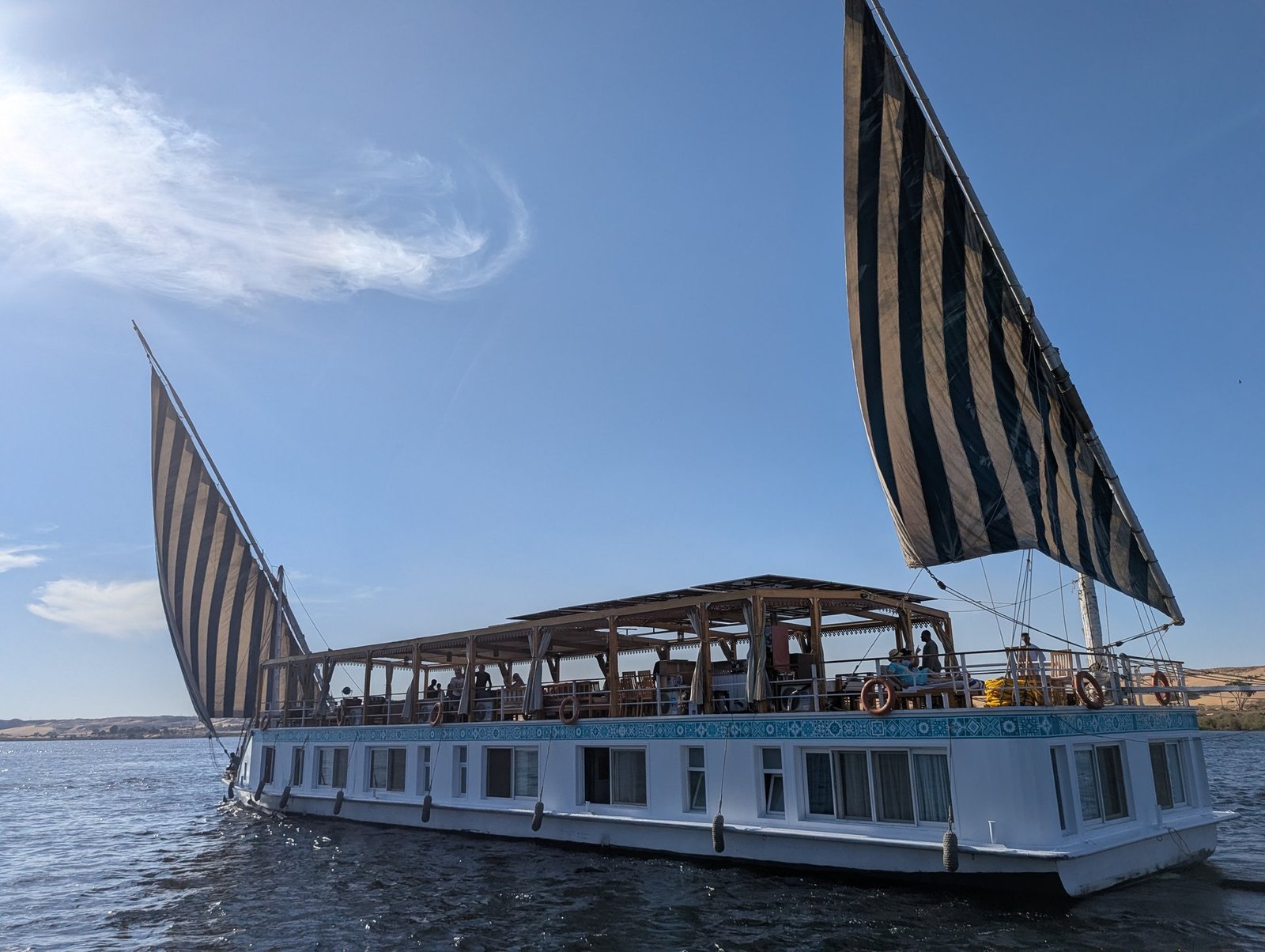
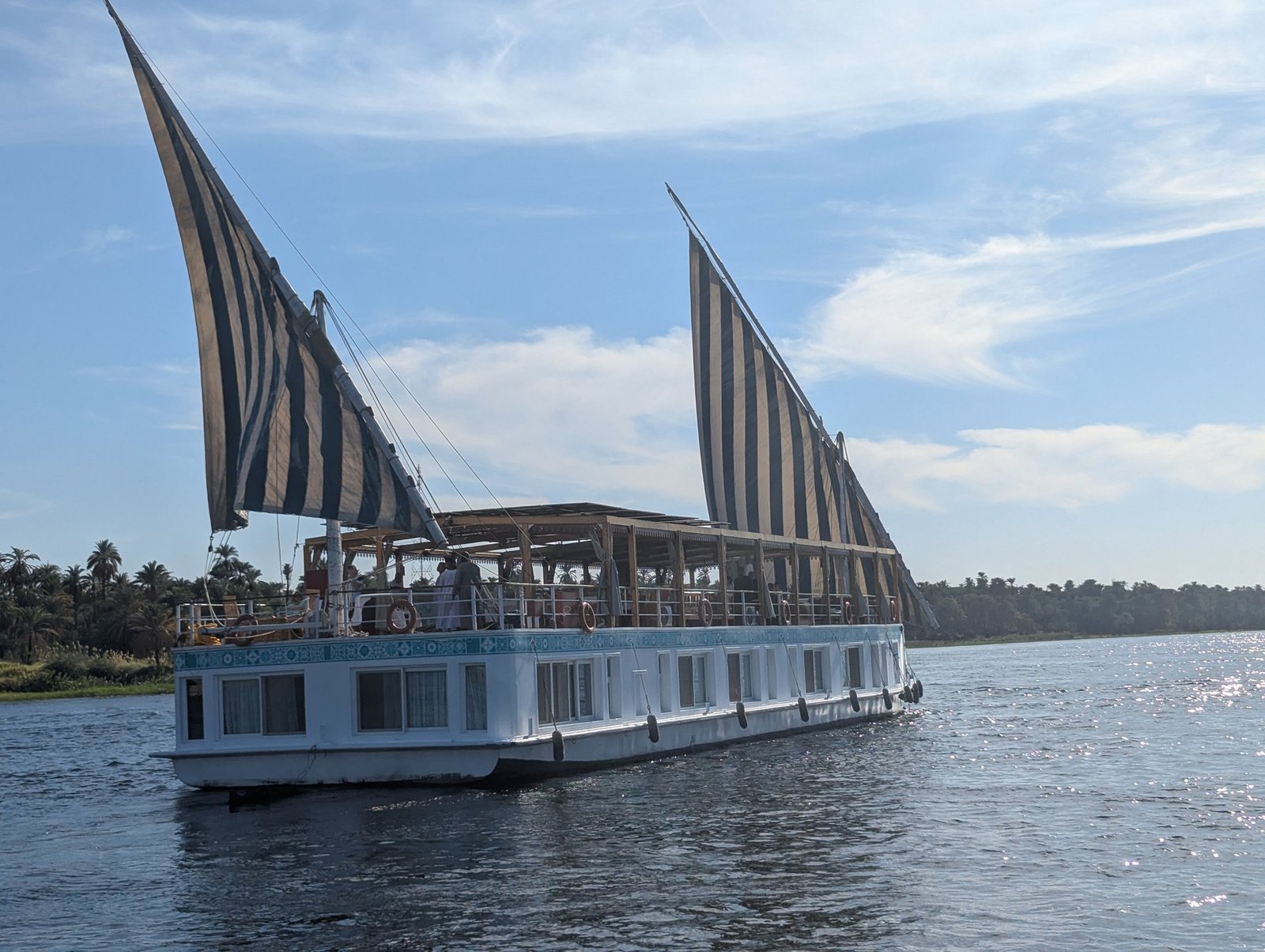
The dahabeya (Arabic for the golden one) is a traditional flat-bottomed Egyptian sailing boat that was already carrying European aristocrats and adventurers along the Nile in the 19th century. Florence Nightingale travelled through Upper Egypt on one, and Agatha Christie drew inspiration from them. After decades in which giant motorised cruise ships dominated the Nile, the dahabeya is now enjoying a renaissance, driven by travellers who are looking for genuine encounters rather than mass tourism. Our own dahabeya Nile cruise sails between Esna and Aswan.
Today, dahabeyas are comfortably appointed boutique Nile boats carrying only a small number of guests. The close-knit community on board, the slowness of sailing and the chance to moor at remote stretches of riverbank make them the best-kept secret among people who know Egypt well.
Dahabeya vs. cruise ship: the difference you can feel
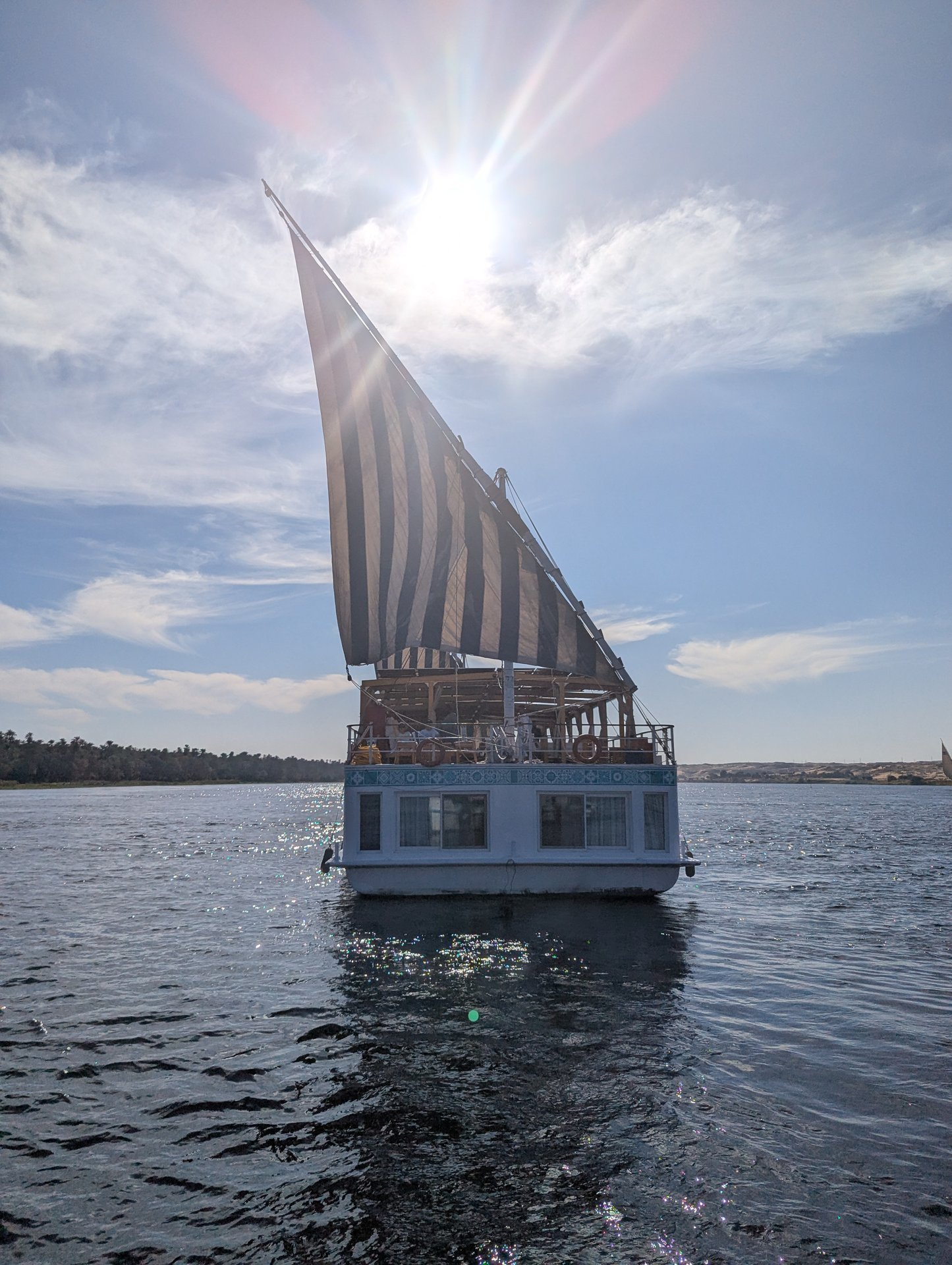
A classic Nile cruise ship carries 150 to 300 passengers, runs to a fixed timetable and moors at the same crowded landing stages as everyone else. A dahabeya Nile cruise works on entirely different principles:
| Large cruise ship | Dahabeya with Orientoura |
|---|---|
| 150-300 guests | A maximum of 16 guests |
| Fixed mass-market timetable | Flexible, individual itinerary |
| Large buffet, one-size-fits-all cooking | Freshly cooked Egyptian food |
| Loud, busy, entertainment programme | Silence, calm, closeness to nature |
| Tourist harbours only | Remote villages & quiet stretches of riverbank too |
| Large team, changing contacts | A personal crew who know you by name |
In short: a cruise ship shows you the highlights of Egypt. A dahabeya shows you Egypt.
The route: from Luxor to Aswan – or the other way round
The classic dahabeya route runs between Luxor and Aswan, one of the most fascinating stretches of the Nile in the world. Over roughly 200 kilometres of river, you pass temples thousands of years old, watch life go by in the fishing villages along the banks and see sunsets that set the whole horizon ablaze in red.
- Luxor – Karnak Temple, the Valley of the Kings, the Valley of the Queens
- Esna – the restored Temple of Khnum, sunk below the level of the modern town
- Edfu – one of the best-preserved temples in all of Egypt, and magical early in the morning before the tour buses arrive
- Kom Ombo – a double temple on the riverbank, lit up at night and seen from the dahabeya – a sight that stays with you
- Aswan – Nubian culture, the Temple of Philae on its island, and Abu Simbel as a day trip
7 tips for slowing down on your dahabeya Nile cruise
These are the kind of tips usually known only to travellers who have been on the Nile several times – or who had an experienced local guide at their side:
1. Become an early riser
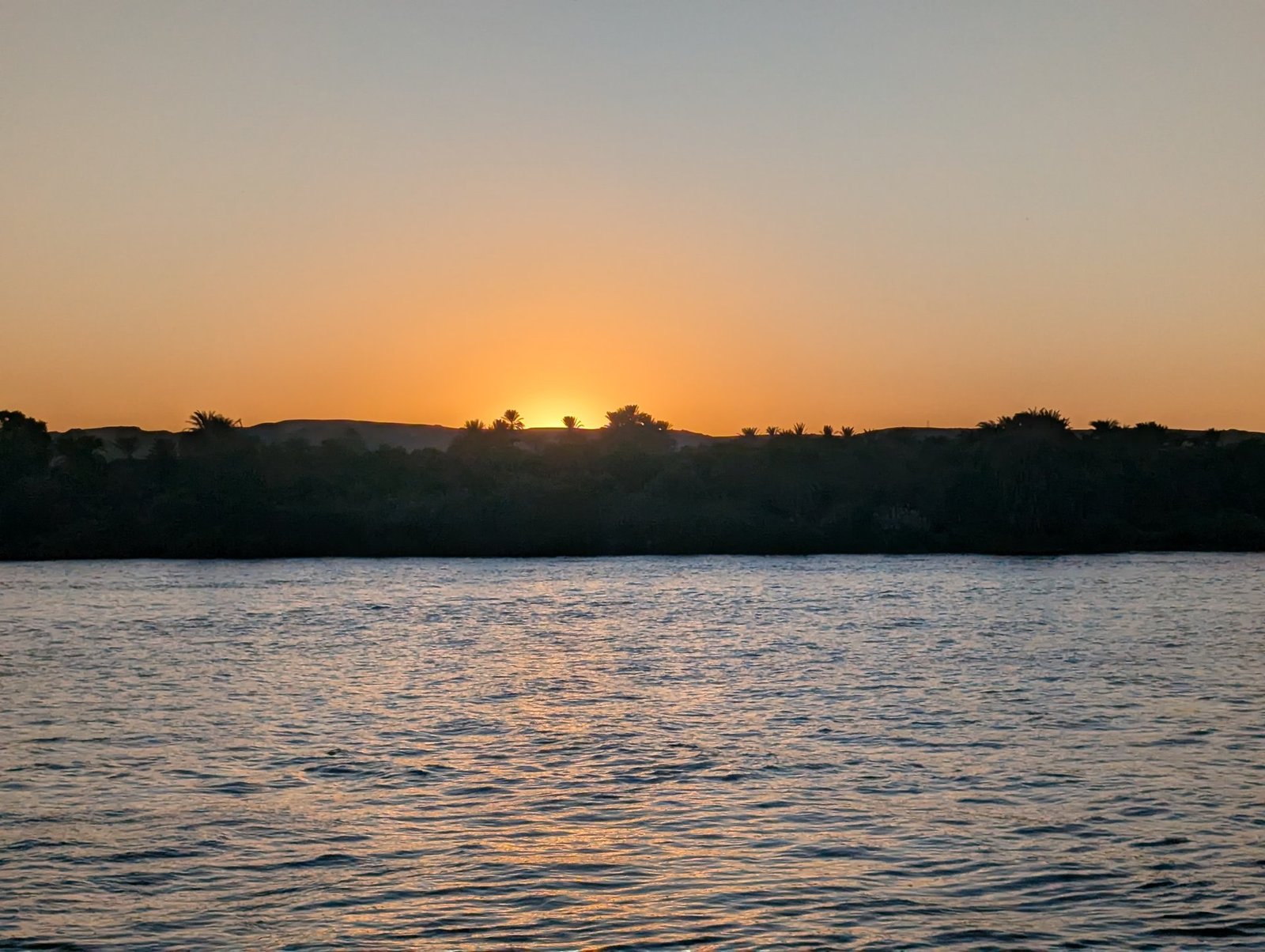
The Nile at dawn is one of the most atmospheric sights in Egypt. Mist over the water, fishing boats, the first light on the palm trees – and you, sitting on the sun deck with a coffee. No travel photo can capture it.
2. Away from the great temples: the small villages
A dahabeya also moors where no tour bus stops. Where the route allows, we call at a Nubian village and visit a family who are glad to receive guests and who know that we are coming. The welcome, and the houses along the bank, are what people remember.
3. Local markets instead of souvenir shops
Esna and Edfu have weekly markets where the villagers do their shopping – not markets for tourists. Fresh spices, handmade baskets, olives and dates. Take your time there.
4. Sail rather than motor
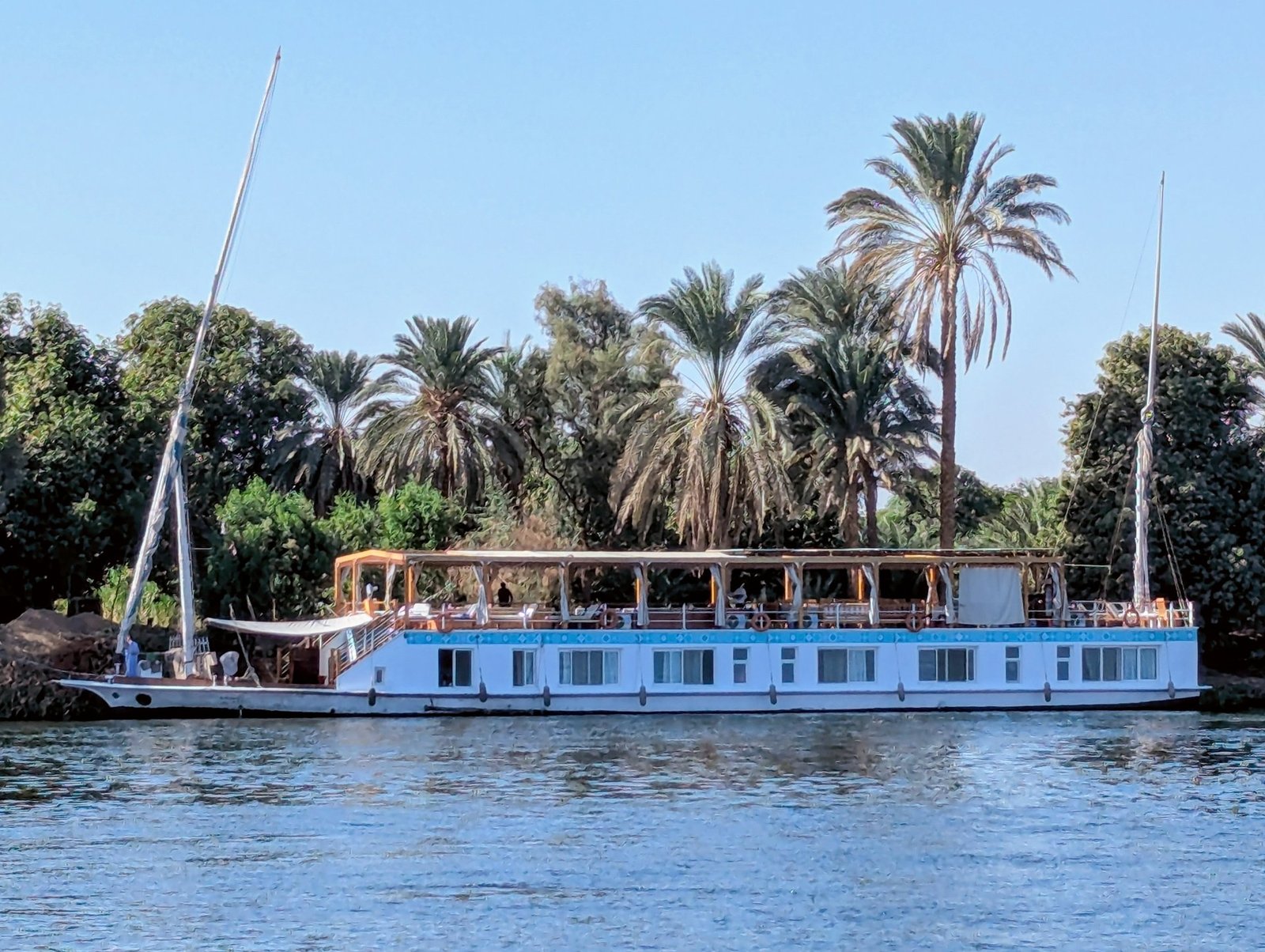
Ask specifically when the sail will be raised. With a good wind, gliding along under sail is a quiet, meditative experience that is fundamentally different from travelling under engine power.
5. The starry sky over the Nile
Far from the light pollution of Egypt’s big cities, the night sky over the Nile is so clear that you can see the Milky Way with the naked eye. On some dahabeyas you can even sleep on the sun deck – just ask.
6. The sound of silence: put your phone away on purpose
It sounds trivial – it isn’t. Travellers say almost unanimously that the moment they stopped taking photos and checking social media was the moment the journey really began.
7. Ask the cooks what they’re cooking
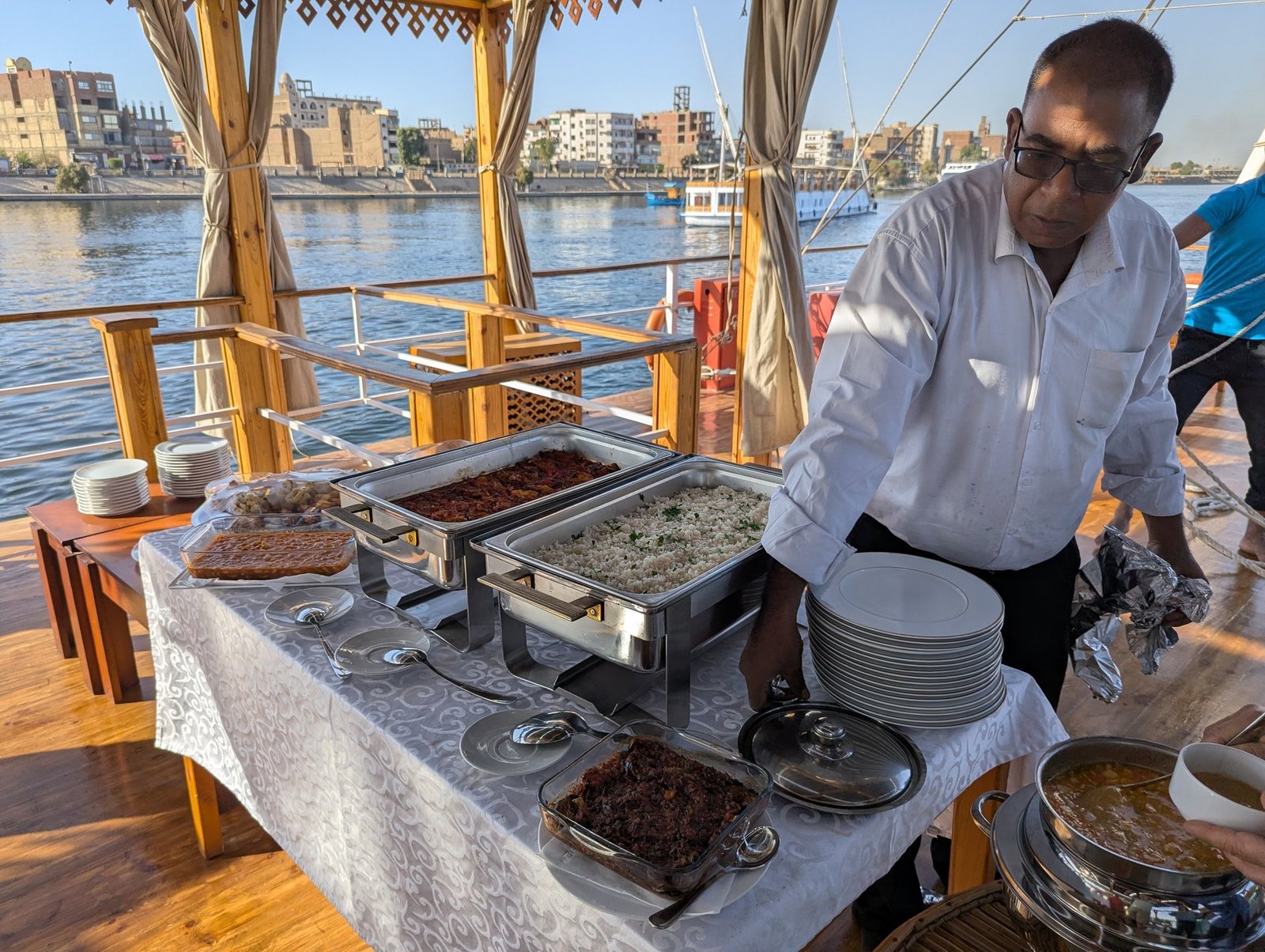
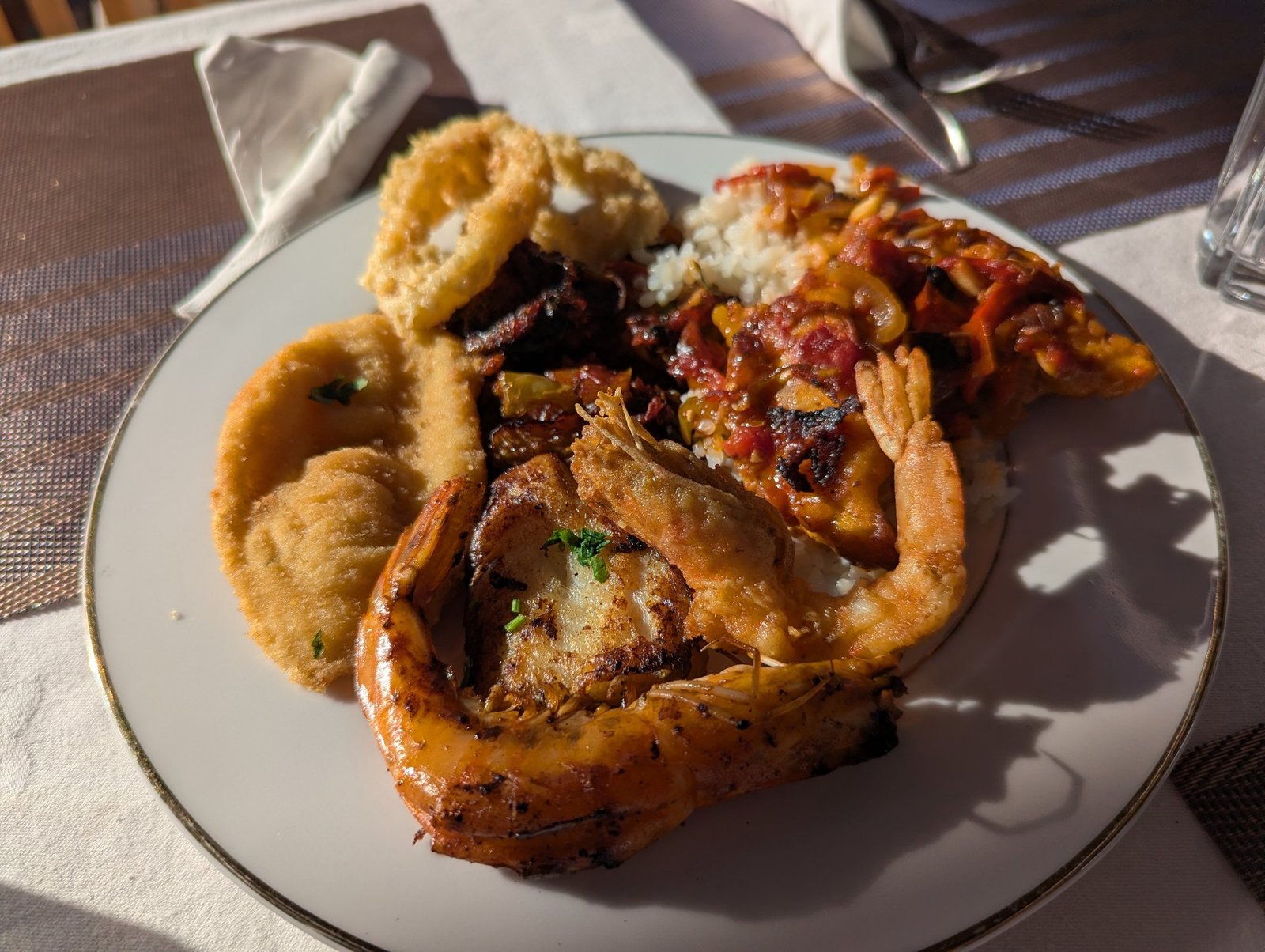
The cooks on board dahabeyas are skilled, and they cook with what the river towns have that morning. Ask the crew which local produce was bought fresh that day – and whether you can watch them cook. Molokhia, freshly made koshari, falafel straight from the pan: this is what Egypt really tastes like.
Orientoura on board: what sets our service apart
At Orientoura, we have been accompanying travellers on the Nile for years – and we have learnt one thing: the difference between a good trip and an unforgettable one does not lie in the luxury of the boat. It lies in the people who travel with you.
Calm as a guiding principle
A dahabeya Nile cruise with Orientoura is not a programme to work your way through. We travel slowly, we stop when there is something beautiful to see, and we leave you room for what travel means at its best: experiencing, not ticking off. No microphone, no entertainment programme, no crowds.
Food worth travelling for
For us, the food on board is not an afterthought. Fresh ingredients from the market every day, prepared to authentic Egyptian recipes with a modern touch. Our cook knows the Nile Delta, the markets and the seasons. Vegetarian and vegan options are, of course, available. If you like, you can dine by candlelight on the sun deck in the evening, looking out over illuminated temples.
Available around the clock
You are in a foreign country, on a boat, sometimes far from any mobile signal. At Orientoura we can always be reached – by day, by night, with questions, requests or in an emergency. That is not a marketing promise; it is how we understand looking after travellers. Our team is there for you via WhatsApp, by phone and directly on board.
Experience & expertise
Our team brings together decades of experience with the Nile and its cultures. Sherif, our founder, is an Egyptologist and local expert – he knows not only the great temples but also the stories behind the stories, the kind of thing you won’t find in any guidebook.
Small groups, big difference
We only take small groups – a maximum of 16 people per dahabeya. That is not a marketing phrase but a deliberate choice of quality over quantity. Less noise, more conversation. Less jostling in front of the temples, more time for real impressions.
Our partner: Turquoise Dahabiya
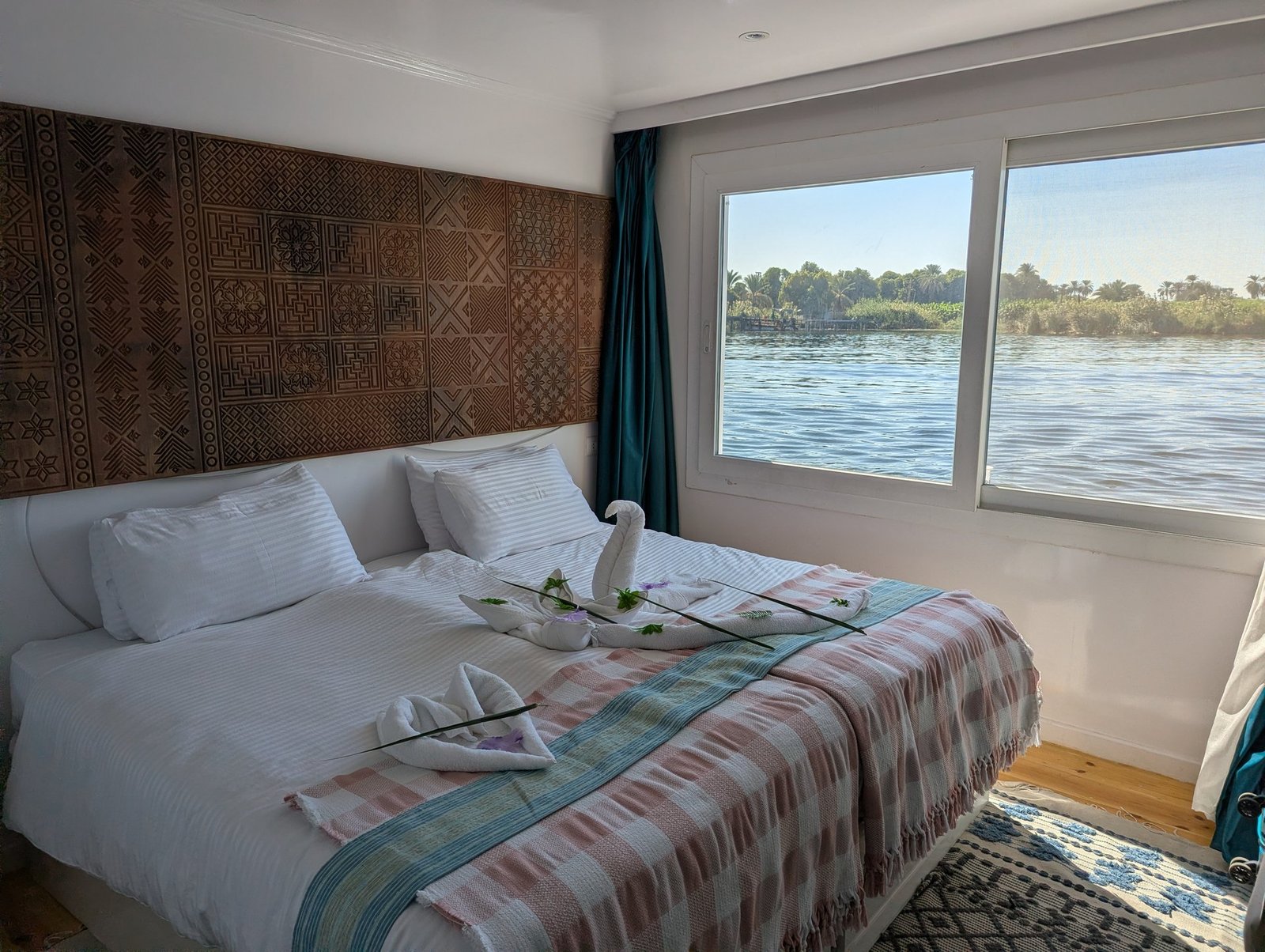
For our Nile cruises we work closely with Turquoise Dahabiya, one of the most renowned dahabeya operators on the Nile. The elegant boat has three suites and five spacious cabins, all with panoramic Nile views, a modern bathroom and a private balcony. Her sister ship, the Imhotep, has ten cabins, four of them suites. The crew have sailed this stretch of the river for years and know the boat and the route inside out. Service on board is discreet, attentive and unhurried.
The tours available on the Turquoise Dahabiya (3, 4 and 7 nights) combine seamlessly with our Orientoura programmes – whether as a stand-alone Nile journey or as part of a longer tour of Egypt.
Frequently asked questions about dahabeya Nile cruises
How long does a dahabeya Nile cruise last?
Most routes between Luxor and Aswan take 4 to 7 nights. For a real experience of slow travel, we recommend at least 5 nights – only then do you truly feel the rhythm of the Nile.
When is the best time to go?
October to April is ideal – pleasant temperatures between 20 and 30°C, clear skies and calm water. In summer, temperatures in Upper Egypt can climb above 40°C; experienced Nile travellers therefore prefer to go in October or March.
Is a dahabeya more expensive than a normal cruise ship?
Yes – and for good reason. Fewer guests, higher-quality fittings, personalised service and fresh cooking mean higher costs per person. Those who have had the experience once don’t regret the investment.
Is it suitable for older travellers?
Absolutely. A dahabeya is particularly well suited to travellers who value comfort and quiet – no athletic ambitions required. No crowds, no hustle, your own pace. The Orientoura team will happily advise you on which activities suit your fitness.
Can I charter a dahabeya privately?
Yes. For special occasions – honeymoons, milestone birthdays, family reunions – we offer private charter options. Get in touch with the Orientoura team and we will design a journey tailored to your group.
Ready for your dahabeya Nile cruise?
The best journeys of your life begin with a decision in favour of slowness. Of the genuine. Of what remains once the suitcase has been unpacked again. A dahabeya Nile cruise with Orientoura is exactly that.
We look forward to welcoming you on the Nile.
If you would like to combine sailing with a daily practice: we also run a yoga retreat on a dahabeya, eight days on the Nile with yoga on board.
Auf Deutsch lesen: Dahabeya Nilkreuzfahrt: Der Geheimtipp für langsames Reisen auf dem Nil