
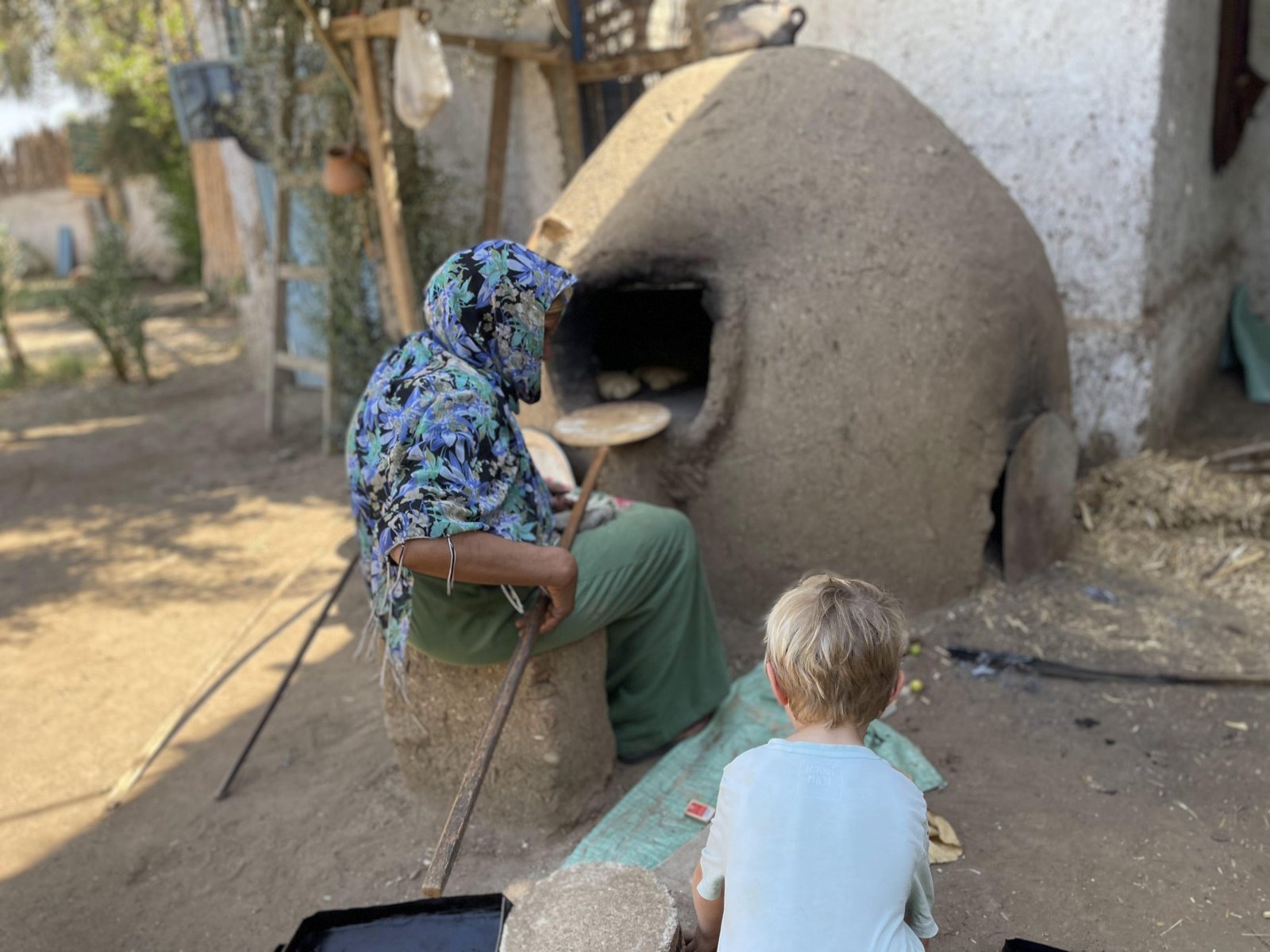
Ask an Egyptian what they had for breakfast this morning and, to exaggerate only slightly, the answer in at least nine cases out of ten will be: ful. Ful medames, to be precise – cooked fava beans (also known as broad beans or field beans), simmered slowly, traditionally overnight, and served with linseed oil, lemon and cumin. It is eaten with warm Egyptian flatbread, usually from a small clay bowl or a tin dish at a street stall.
What few people know: ful medames is probably the oldest breakfast dish in the world to have been prepared without interruption. The archaeological traces go back to the 12th Dynasty, some four thousand years ago. In this article I explain what we actually know – and what is simply a nice story.
What archaeology tells us
The first clear trace: fava bean seeds were found in a tomb from the 12th Dynasty (roughly 1991 to 1802 BC, the Middle Kingdom). Further finds come from Saqqara and Kom Oshim and date from the Graeco-Roman period. Some of these seeds are now in the Agricultural Museum in Dokki, Cairo, where they are on public display.
The pharaohs were buried with supplies of beans; that much is documented. Beans were considered provisions for the journey into the afterlife, and because they keep very well when dried, they were particularly suited to the purpose. Whether what lay in those storage jars was already prepared as ful medames in its present form, we cannot say for certain. But the basic ingredient is the same, the cooking method (slow simmering in a low pot over a small flame) is ancient, and the etymology helps: medames comes from the Coptic word for “buried”, a reference to the traditional method in which the pot was buried overnight in the hot ashes of the oven.
How ful is made today
Nobody in Egypt cooks ful in ten minutes. The beans are soaked overnight and then left to cook on the lowest heat for at least six hours, usually eight to ten. The classic vessel for this is the idra, a pot-bellied copper pot with a narrow neck. The shape is no accident: it holds in the steam and heat but prevents a rolling boil. The beans stay soft without turning to mush.
At any decent ful stall, in Cairo as in Luxor, the idra has been sitting on the flame since early evening. When the first delivery drivers stop by at five in the morning, the beans are perfect. At nine, when the office workers arrive, they are still good. By eleven, the owner is scooping from the edge of the pot – which is where the beans are creamiest.
The seasoning varies by region:
- In Cairo: cumin, hot paprika, sometimes tomatoes.
- In Alexandria: ful iskandarani, topped with salad, tahini and mint.
- In Upper Egypt (Luxor, Aswan): lemon, parsley, a splash of oil and, optionally, garlic.
- In Sinai: often just olive oil, salt and a splash of hot broth.
Why the dish has survived
Four millennia is a long time. Not many dishes have that kind of staying power. So why ful, of all things?
There are three reasons – the same ones that come up at the breakfast table on our dahabeya Nile cruise:
First, ful is cheap. Fava beans grow well in Egypt, especially in the winter months, rotated after wheat. Per kilo, they cost a fraction of what meat costs. Even today, a breakfast of ful and bread in Luxor costs less than one euro.
Second, ful is nourishing. Around a quarter of its dry weight is protein. For working people (farmers, craftsmen, traders) it was, and still is, a complete breakfast that keeps you going until lunchtime.
Third, ful is sociable. You eat it standing up, together, at the stall. The ful seller knows his regulars. In the big cities, the walk to the ful stall is part of the daily rhythm, much like the morning trip to the bakery or the first coffee on the way to work elsewhere.
Trying ful on your travels
In my view, if you travel through Egypt and never try ful, you haven’t really got to know the cuisine. The hotel buffet version is fine, but real ful is found on the street corner. For good quality, your best bet is to ask your guide for a stall they trust.
A visit to a ful stall we trust is part of the programme on selected trips, such as the culinary tour. It fits particularly well with our farm experience near Luxor, where we see the beans growing in the field before we eat them. And on the dahabeya Nile cruise, our cook serves ful on some mornings – slow-cooked overnight, just as it should be.
More from the Egyptian kitchen: Molokhia – Egypt’s green soup · Cumin in ancient Egypt
About the author: Dr Sherif Azab-Els grew up in Egypt, lives in Germany, studied Egyptology and is the founder of Orientoura.
Auf Deutsch lesen: Ful Medames: Das Frühstück der Pharaonen (4000 Jahre)