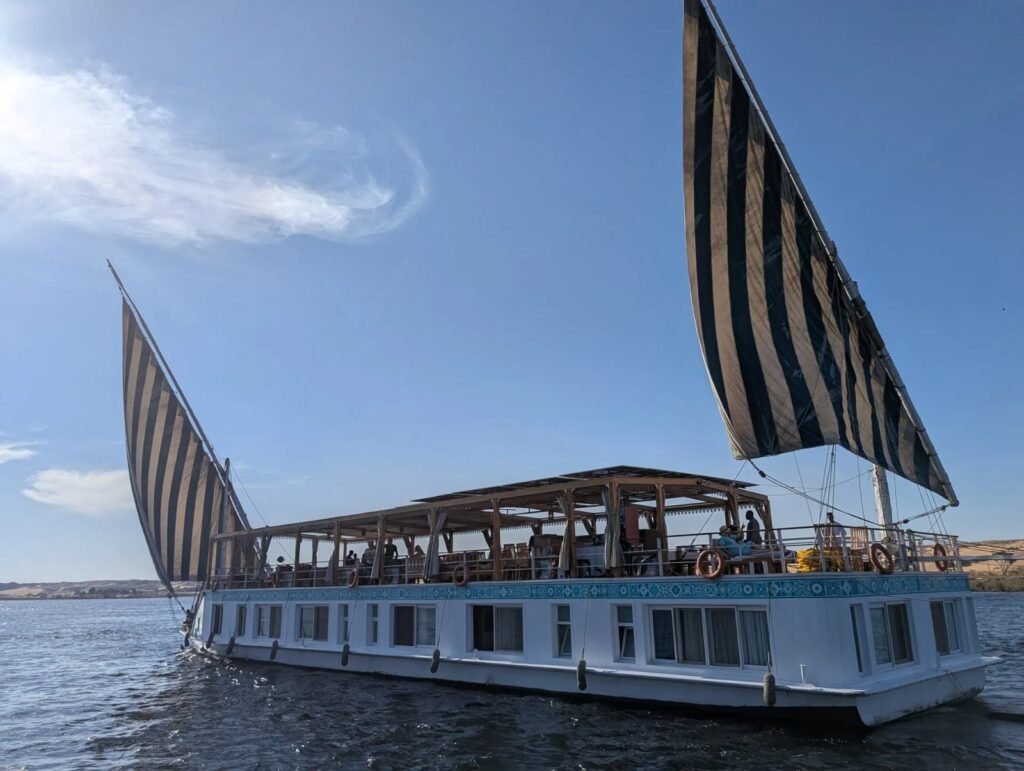
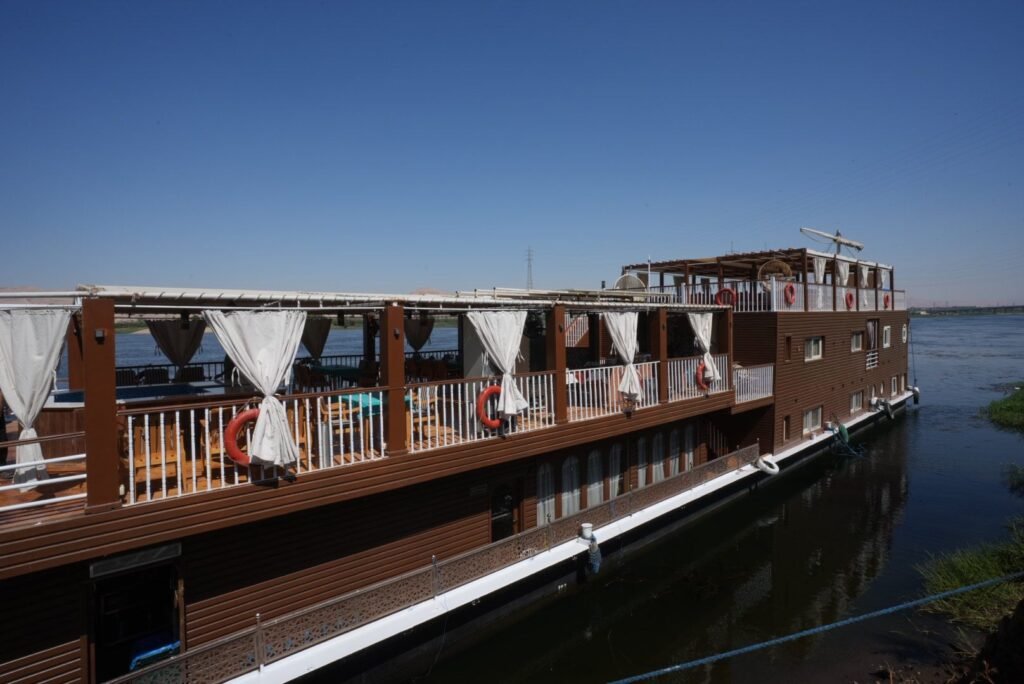
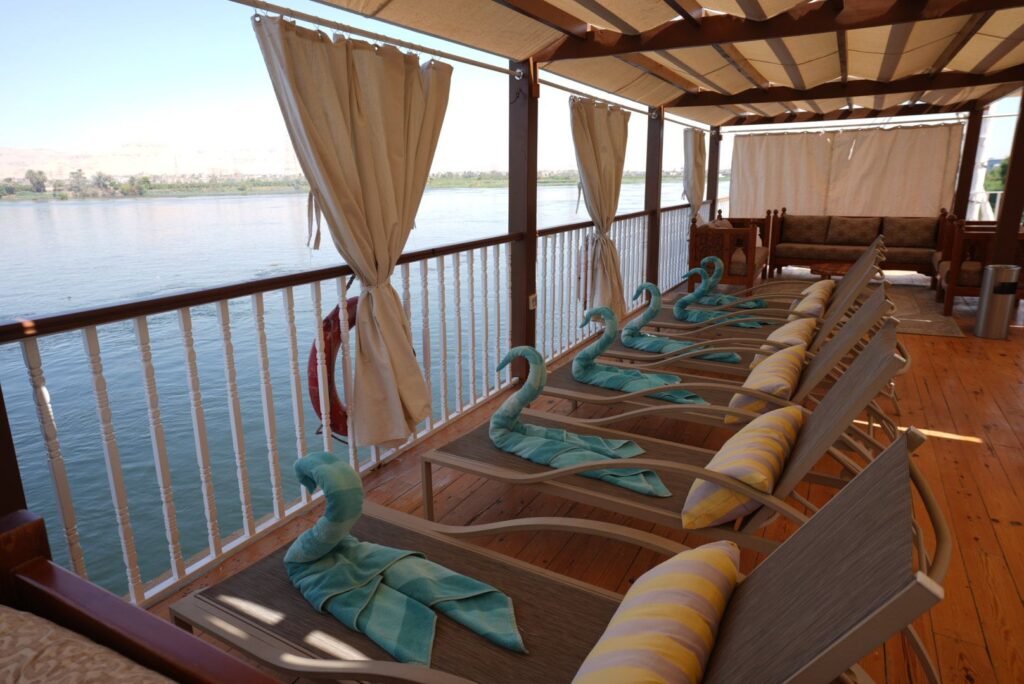
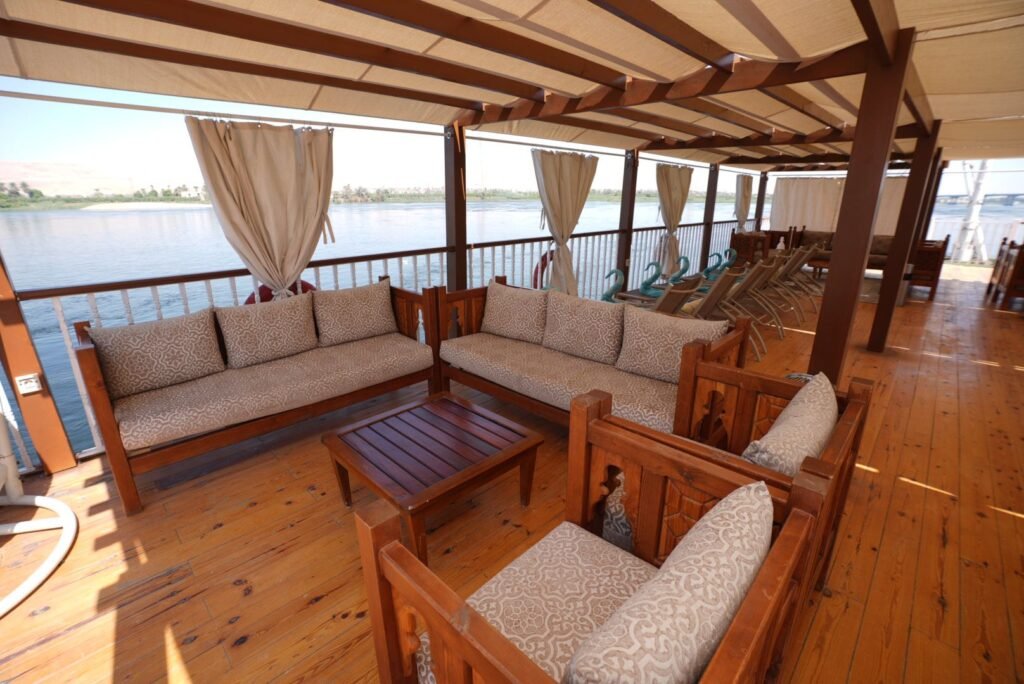
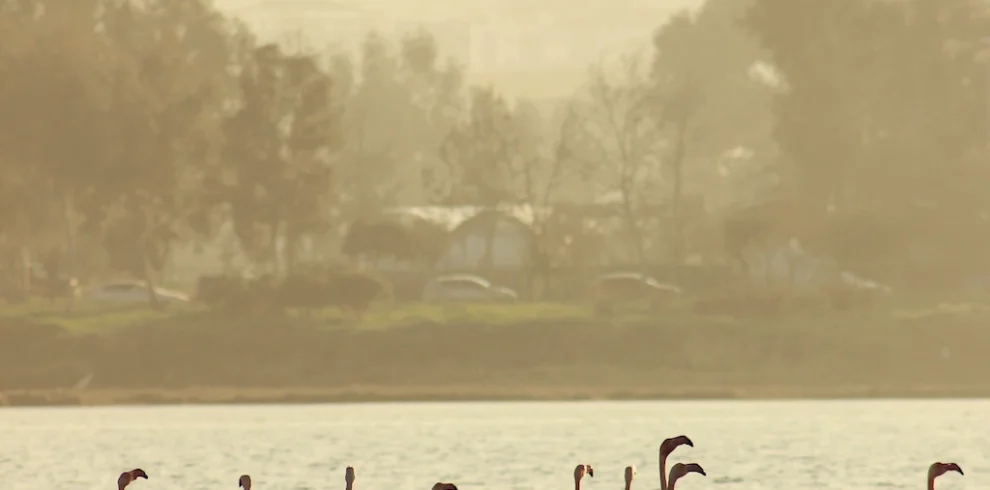
Four nights under sail from Esna to Aswan, on a wooden boat with a handful of cabins. This is the short dahabeya — the river itself rather than a full Egypt itinerary, and the best way we know to spend four days doing very little in a place worth doing very little in.
Luxor first, then the boat
The sailing begins at Esna, but Luxor comes first and both banks of it are in the programme. You arrive and go straight to the East Bank in the afternoon: Karnak, then Luxor Temple as the light goes. The next morning, early, across to the West Bank for the Valley of the Kings and Hatshepsut, before the heat and before the coaches. Only then does the boat cast off from Esna, and from that point the river sets the pace: Edfu has a day of its own, and so does the stretch through Gebel el-Silsila and Kom Ombo to the Nubian shore.
Both of those days are driven in a private air-conditioned car with your Egyptologist, and every entrance fee is in the price. It is the reason this journey works as a complete trip rather than a river section: you see the largest temple complex in Egypt and the royal tombs, and then you stop moving for four days.
Your ticket to the Valley of the Kings covers three tombs and which ones are open rotates, so nobody can promise a particular one in advance — here is how to choose from whatever is open. If you want longer in Luxor, we add nights before you board (four of them here), and the eight-day version runs the same river all the way to Abu Simbel.
What is on this stretch of river
Esna. The Temple of Khnum sits nine metres below the modern town, which grew up over it. You look down into a hypostyle hall with its ceiling intact and its astronomical decoration still readable.
Edfu. The most complete temple in Egypt, roof on, pylon standing, reached by horse carriage from the mooring.
Gebel el-Silsila. The sandstone quarries that built Karnak and Edfu, with rock-cut shrines and inscriptions where the river narrows. There is no quay, which is exactly why the big ships pass it and a dahabeya can tie up.
Kom Ombo. A double temple at the water’s edge, everything mirrored for two gods, with a room of mummified crocodiles beside it.
Philae. The island temple of Isis at Aswan, moved stone by stone when the dam went up.
Does it sail?
When there is wind, yes, and the engine goes off. When there is not, a small tug takes the boat in hand so the schedule holds. Anyone who tells you their dahabeya sails the whole way is describing a hope rather than a river. The days it does sail are the ones you will describe afterwards.
Honestly
Four nights is short. You will want a fifth by day three, which is either a recommendation or a warning depending on how you read it.
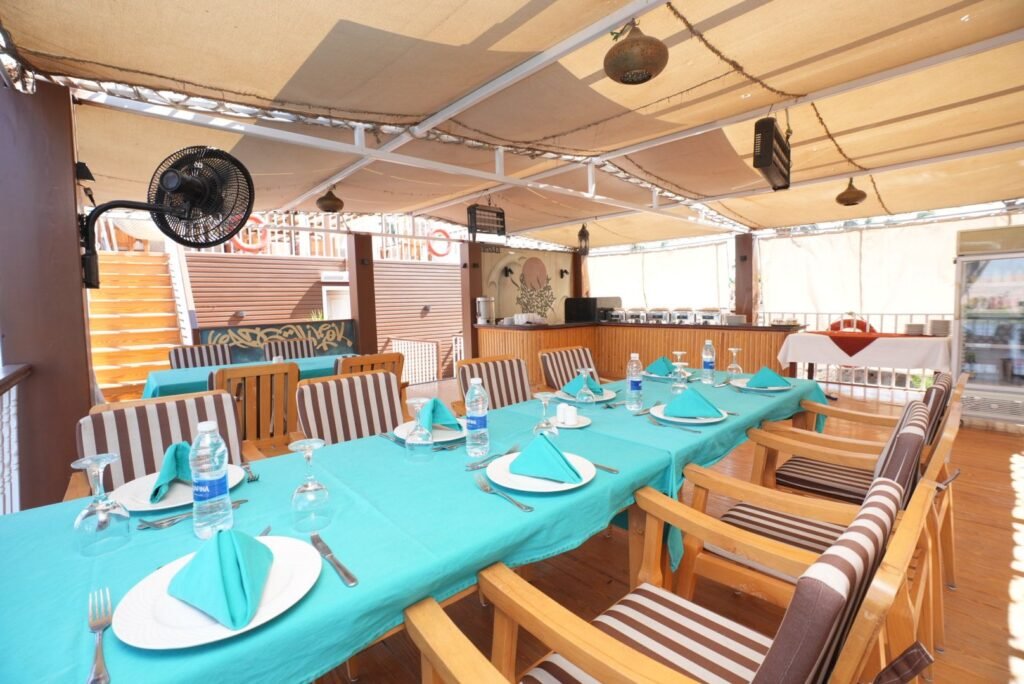
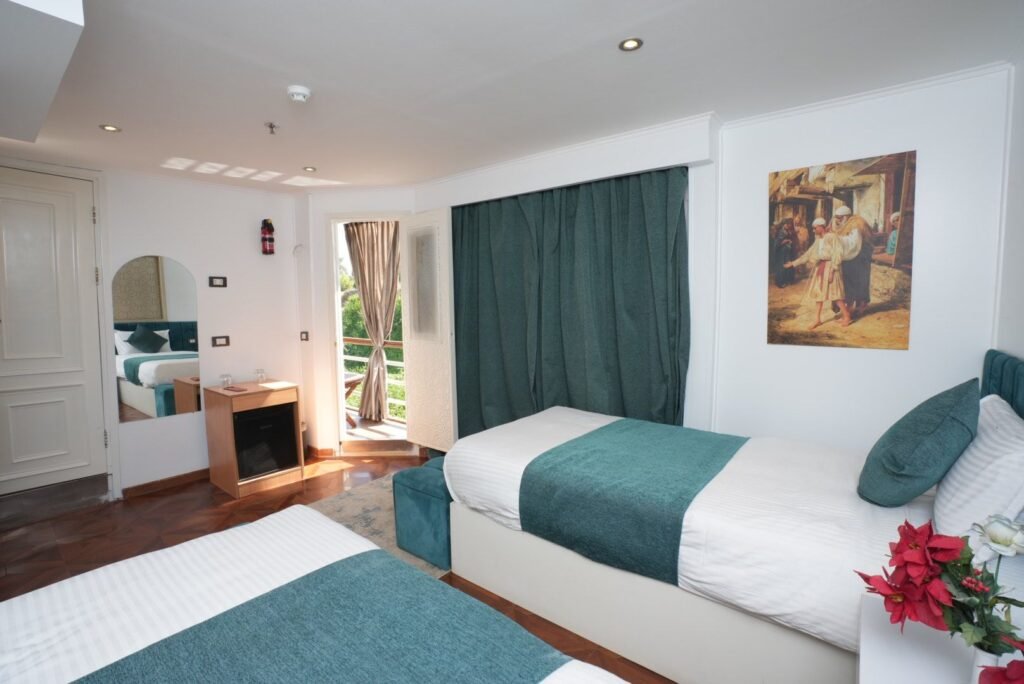
Cabins are compact and the stairs are narrow. There is no pool, no lift and no evening programme beyond the deck and the people on it. Going ashore sometimes means a plank and a hand. If mobility is a concern, tell us before you book and we will describe each mooring honestly rather than let you find out.
Who it suits
People who have seen Luxor already, or are seeing it separately. Anyone who wants the river rather than a checklist. Readers, photographers, and anybody who has done a large cruise somewhere and did not enjoy the scale.
Not for guests who want a pool and a programme, and not the right first Egypt trip on its own — it is the middle of a longer journey, not the whole of one.
Slower, or differently — always possible. Tell us how you like to travel and we will rebuild the day around it.
Still deciding between a sailing boat and a five-star ship? Here is the honest comparison, and a month-by-month guide to when the Nile is at its best.
Travelling as a family or a group who would rather have the boat to themselves? The private family Nile journey is the same river at a pace set by the youngest person on board.
Diese Reise auf Deutsch: Dahabeya-Nilkreuzfahrt in Ägypten