Seven nights on a dahabeya between Luxor and Aswan, and then Abu Simbel. This is the longest time on the water we offer, and the reason it exists is simple: the standard Nile cruise gives you three or four nights, which is enough to see the temples and not enough to understand the river.
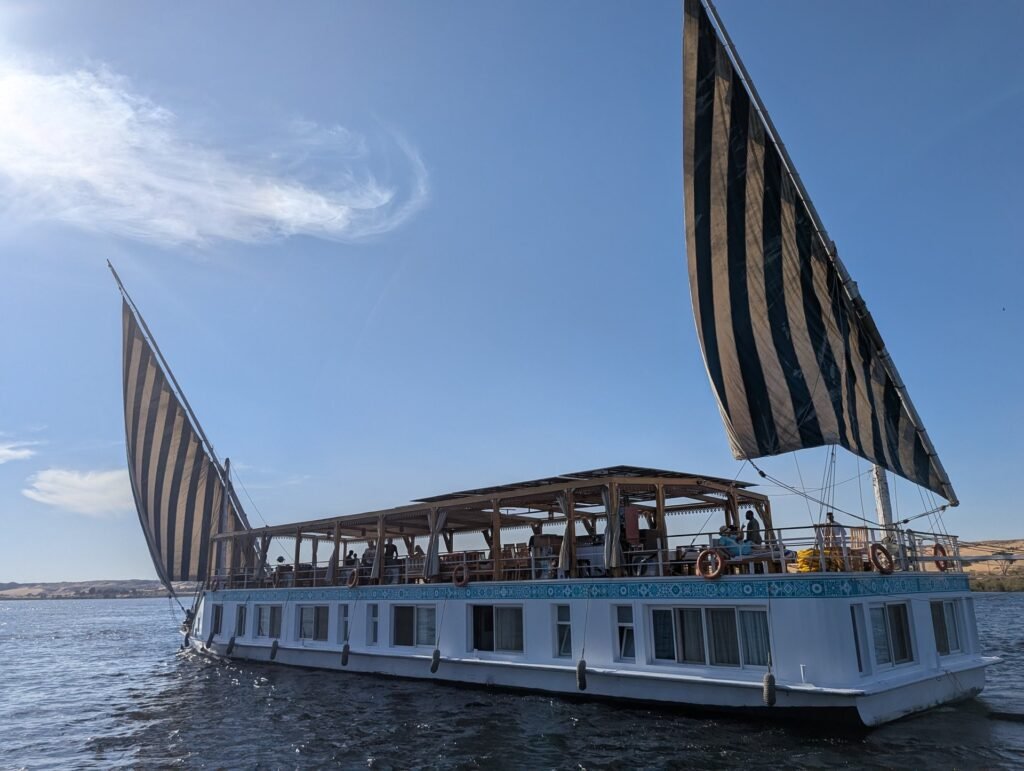
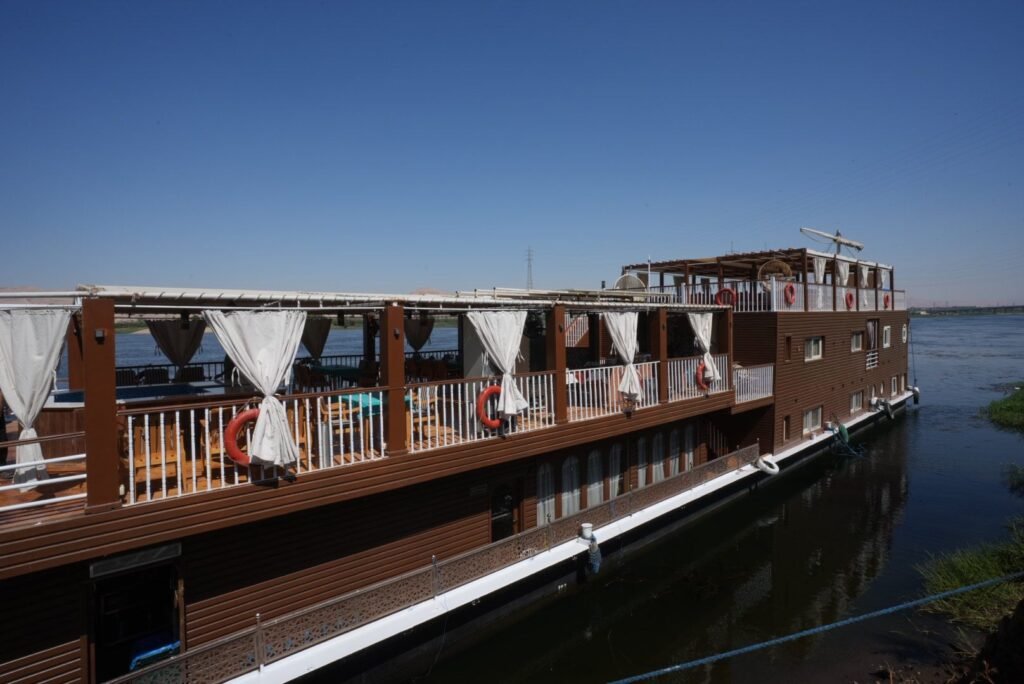
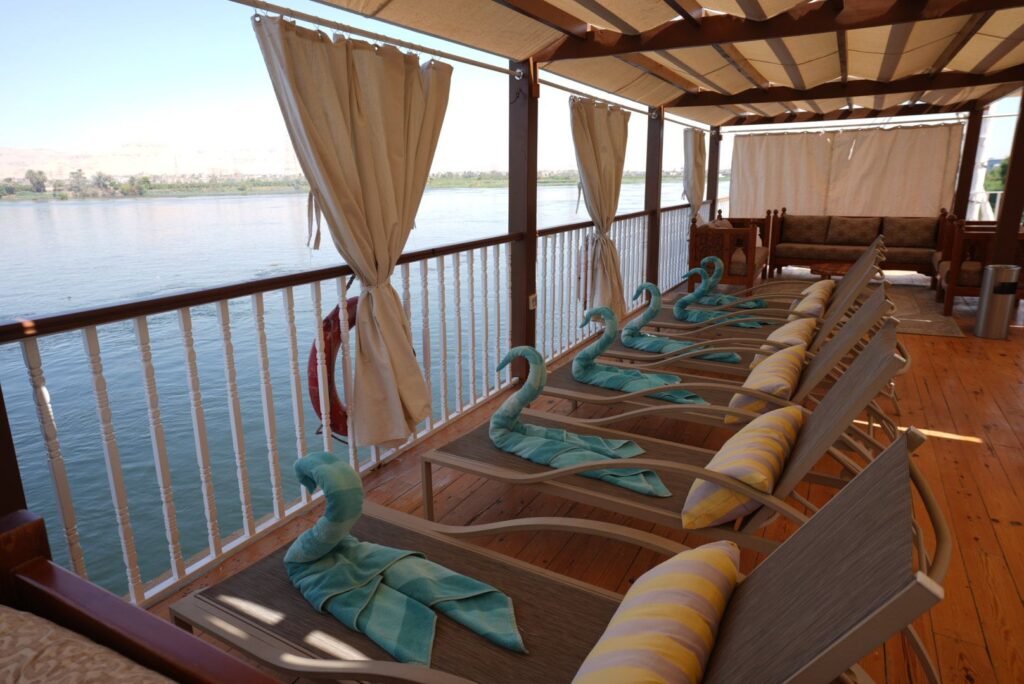
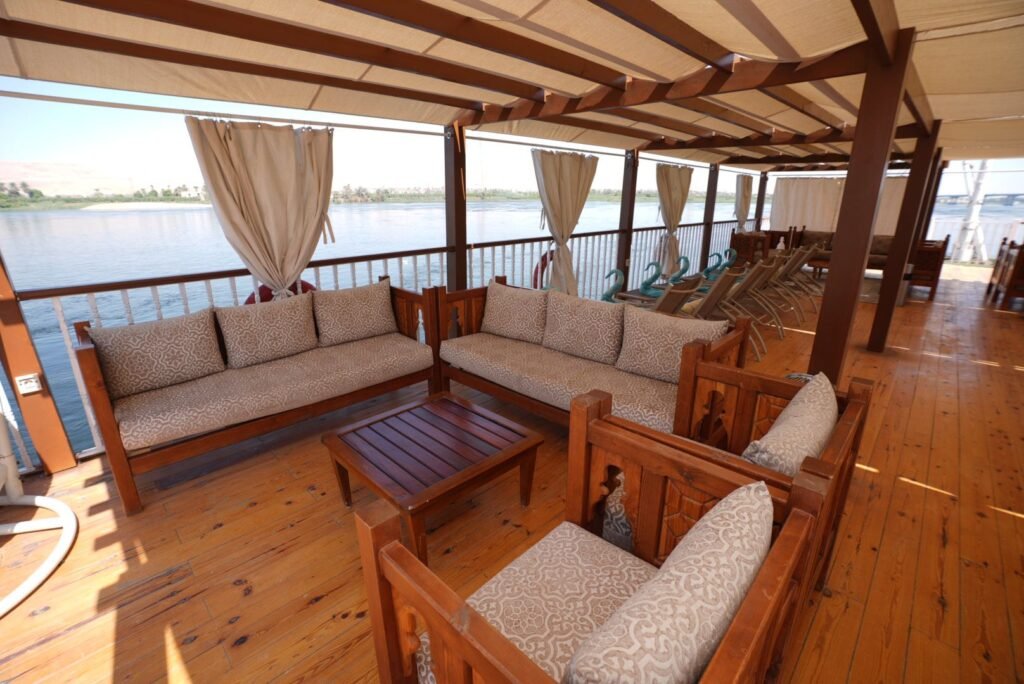
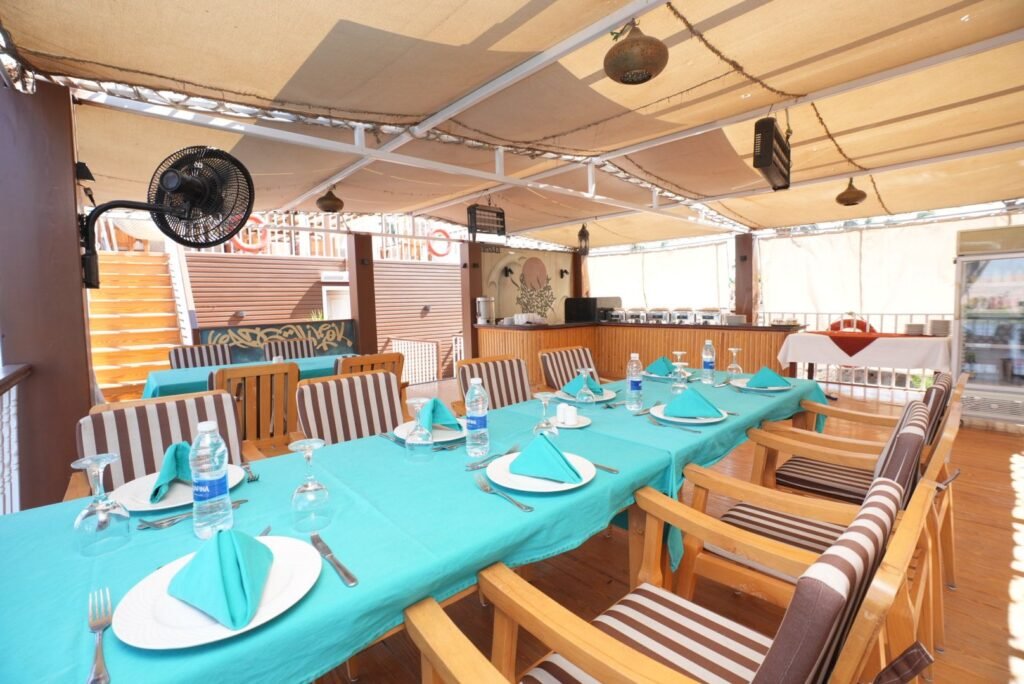
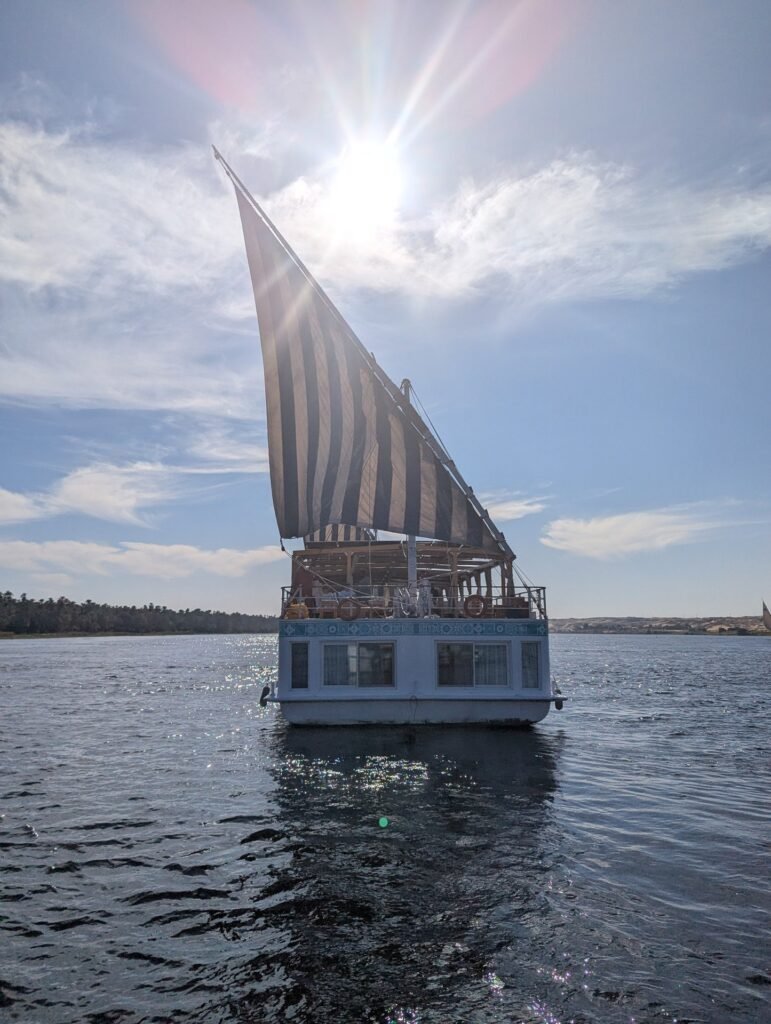
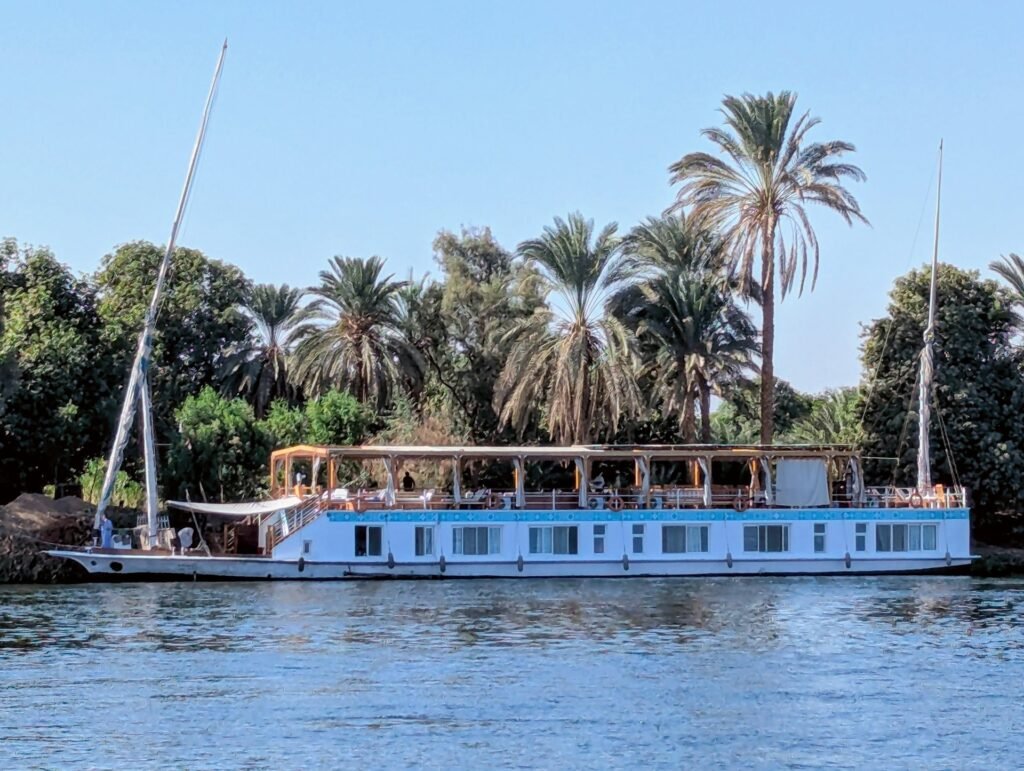
A dahabeya is a two-masted sailing boat with a handful of cabins. It was how travellers went up the Nile in the nineteenth century, before steamers, and the shape of the boat has not changed much. Ours carries eight to twelve guests. There is no pool, no lift and no evening entertainment. There is a deck, a cook, a crew who learn your name on the first day, and a river.
What a small boat actually changes
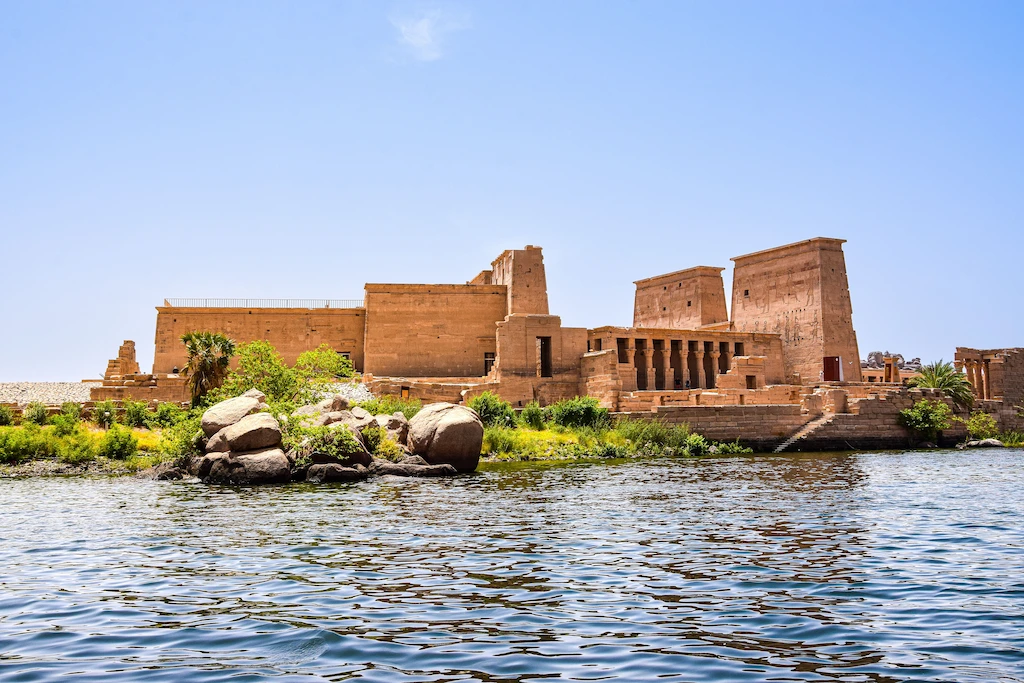
Where you stop. A cruise ship needs a concrete quay and there are only so many; a dahabeya ties up at a sandbank, at a village, at a quarry. Gebel el-Silsila, where the sandstone for Karnak and Edfu was cut out of the cliffs, has no dock — which is why almost nobody sees it.
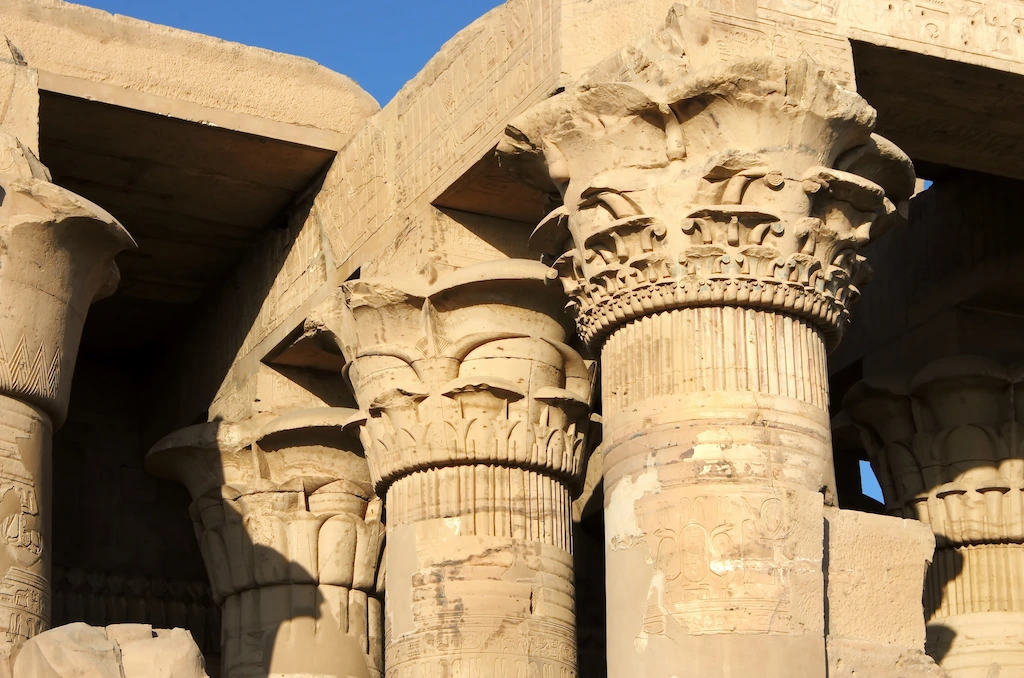
And when you go ashore. The large ships travel in convoys and arrive at Edfu and Kom Ombo together, which is why those temples are empty at eight and heaving at ten. A small boat is not tied to that schedule. You go in before them, or after they have left.
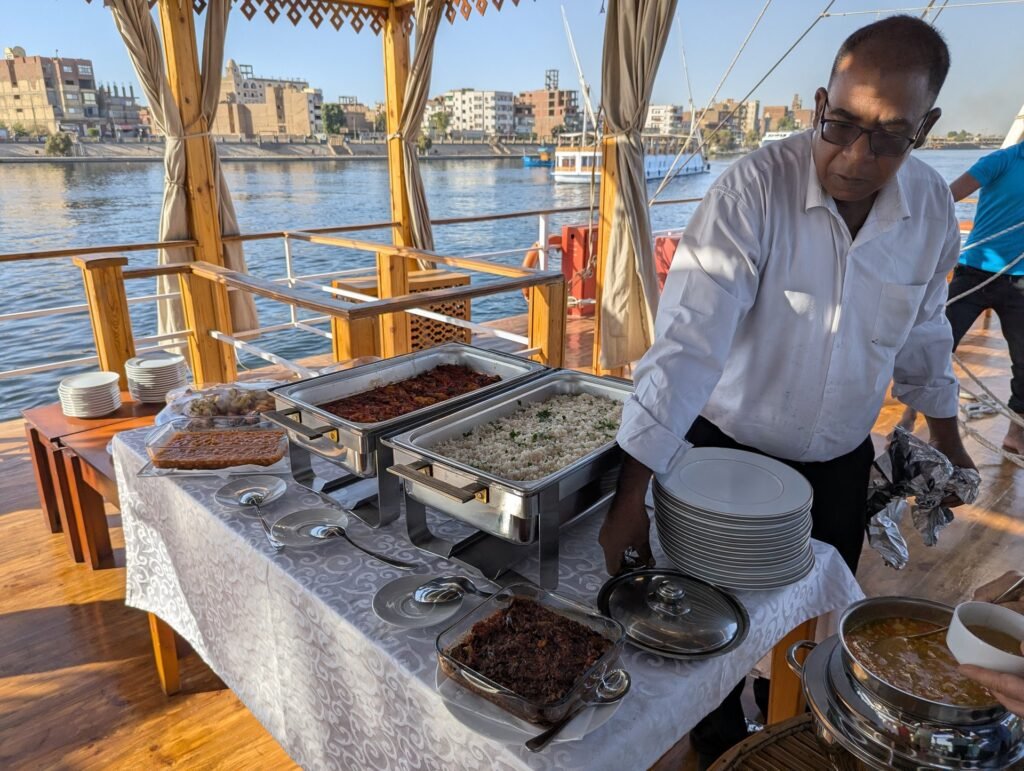
The third thing is harder to put in a brochure. On a ship with two hundred guests you are a passenger. On a boat with ten you are a guest, and by the third evening the crew know that you take your coffee without sugar and that you would rather eat late.
Does it really sail?
When there is wind, yes — the sails go up and the engine goes off, and it is very quiet. When there is no wind, or when the schedule needs holding, a small tug takes the boat in hand. Any operator who tells you their dahabeya sails the entire way is describing an ambition, not a river. We would rather say it plainly: some of this journey is under sail and some of it is not, and the days it sails are the ones you will talk about afterwards.
Abu Simbel at the end
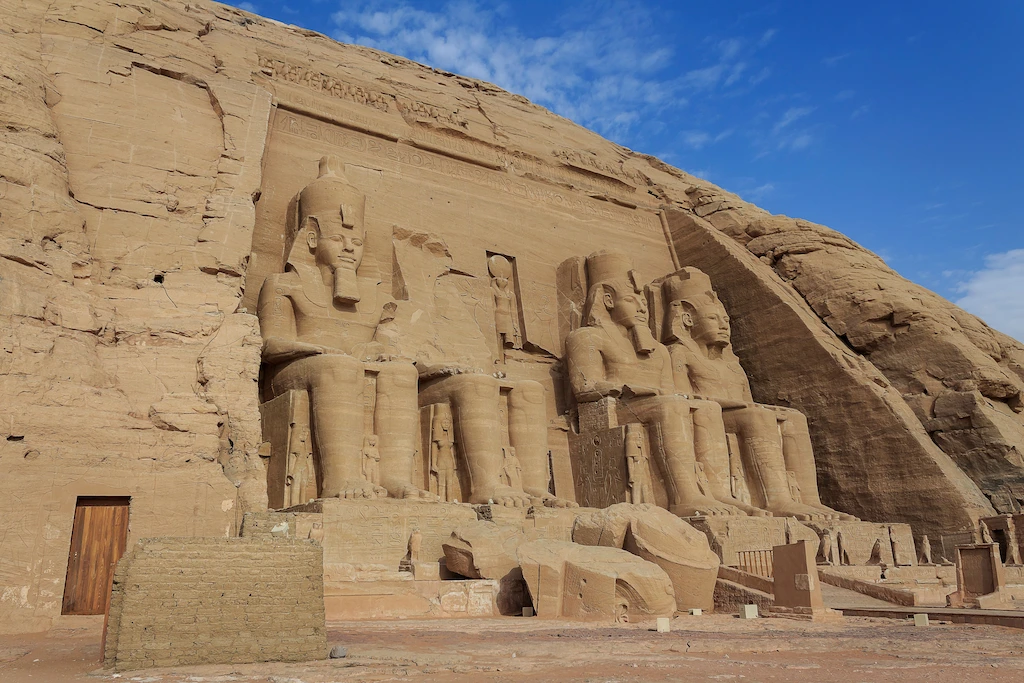
Three hours south of Aswan, close to the Sudanese border, four seated figures of Ramesses II twenty metres high are cut into a sandstone cliff. Beside them stands a second temple for his queen Nefertari, at nearly the same scale — which almost never happened in Egypt. In the 1960s the whole complex was sawn into more than a thousand blocks and reassembled sixty metres higher up, because Lake Nasser was about to cover it.
It means an early start, and it is the single sight our guests most often name as the one they would go back for.
Who it suits, and who it does not
It suits people who like small groups, quiet evenings and time that is not filled for them. It suits keen readers, photographers and anyone who has done a big-ship cruise somewhere and did not enjoy the scale.
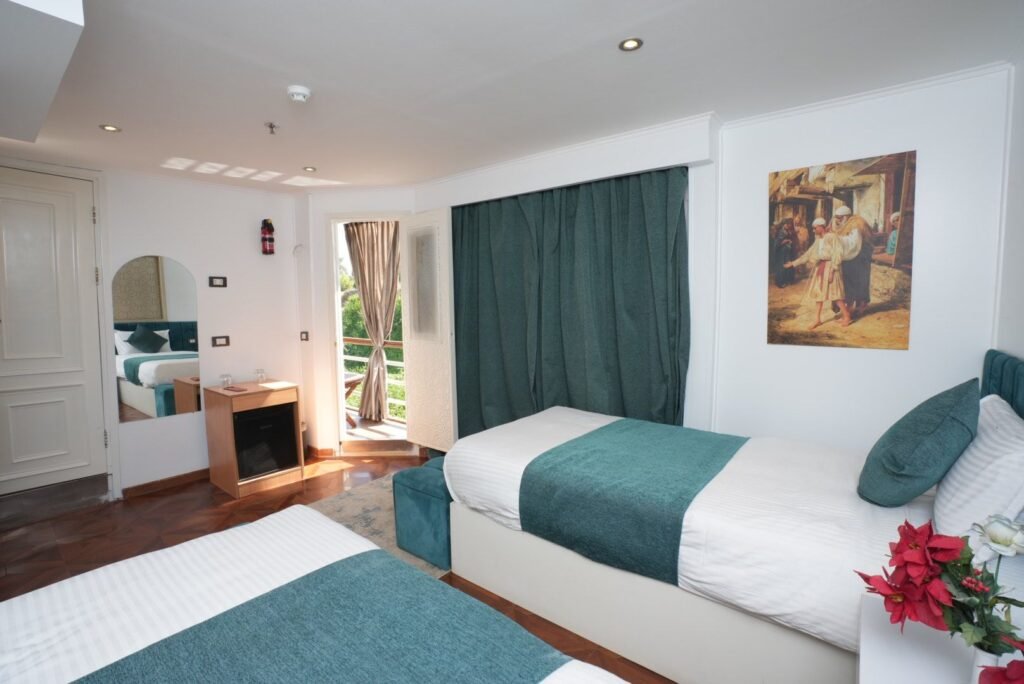
It does not suit travellers who want a pool and a programme, or young children who need other children. Cabins are compact, the boat has steps rather than lifts, and getting ashore sometimes means a plank and a hand. If mobility is a concern, tell us before you book and we will describe each mooring honestly.
Slower, or differently — always possible. Tell us how you like to travel and we will rebuild the day around it.
New to this kind of boat? Our dahabeya versus cruise ship comparison explains what the difference feels like in practice, and the month you choose matters more on a boat with no air-conditioned lounge to retreat into.