Yoga Retreat on a Dahabeya — Sailing the Nile

8 Days

Overview

Eight days on the Nile and none of them in a hurry. Three nights in Luxor to find your feet among the great temples, then four nights aboard a sailing dahabeya that carries you south to Aswan at the speed of the wind. Yoga twice a day, on deck, with the river beside you.

Most retreats put you in a room with a view of a room. This one puts the practice on the open deck of a boat that moves, so the light is different every morning and the sound behind the breath is water rather than air conditioning. That is the whole idea, and it is also the reason the group stays small.

How the two halves fit together

Luxor first, on land, for three nights. That is where the demanding sightseeing sits: Karnak, Luxor Temple, the Valley of the Kings, Hatshepsut and Medinet Habu. Doing it from a hotel means you are not carrying a suitcase around it, and it means the boat days afterwards are genuinely restful rather than a second itinerary.

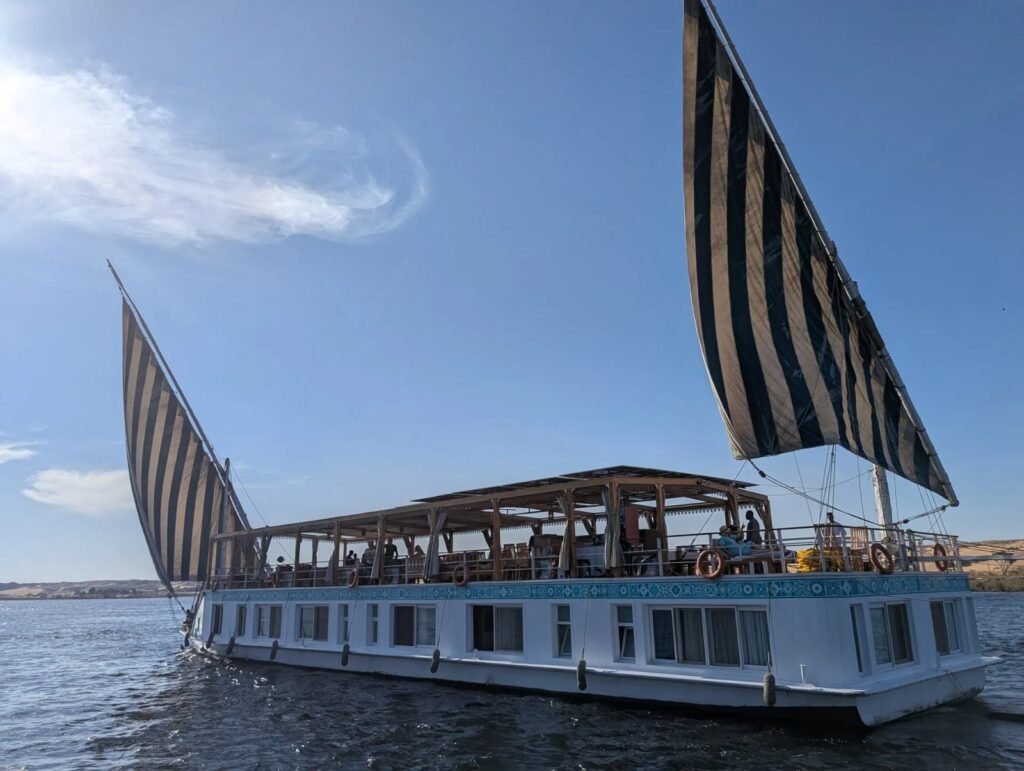
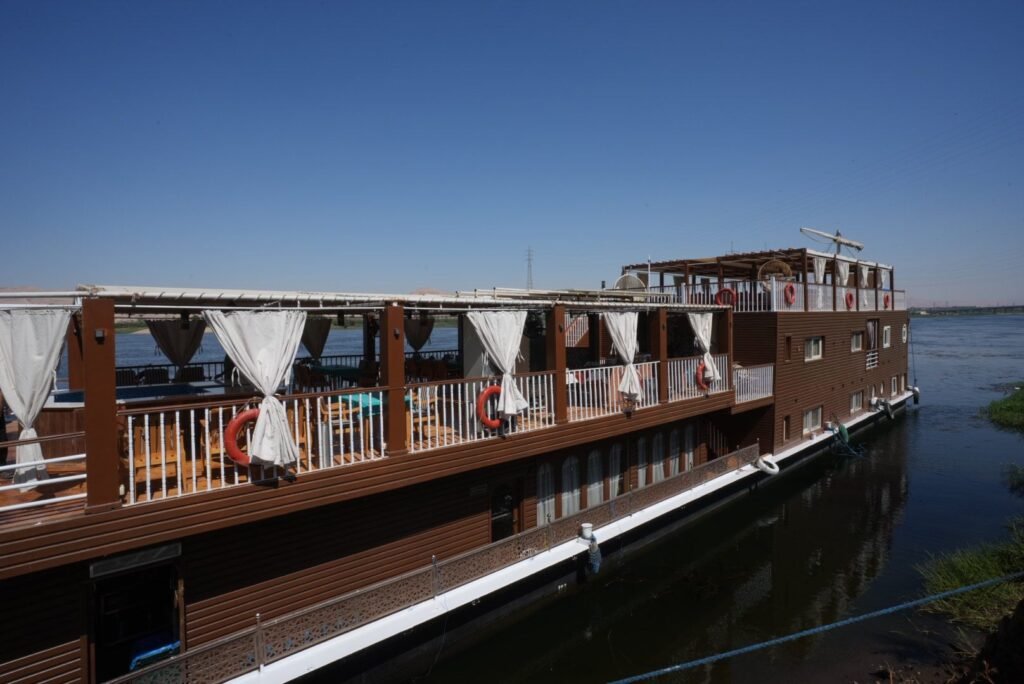
Then four nights under sail from Esna to Aswan. Esna, Edfu, Kom Ombo and Philae are on the way and each is a morning rather than a day. The rest is deck, water, and a good deal of nothing.

The practice

Twice a day with a dedicated teacher: something active at first light, something slower as the sun goes down. No experience is required and none is assumed. The group is small enough that the session is built around the people actually in it, which is not something a studio class can do.

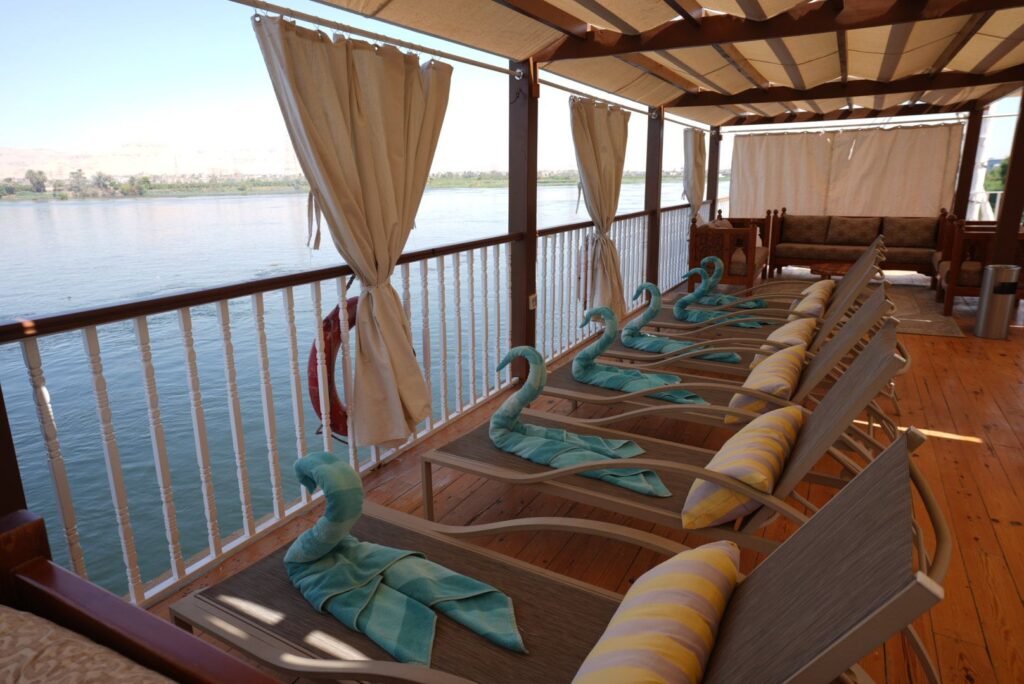
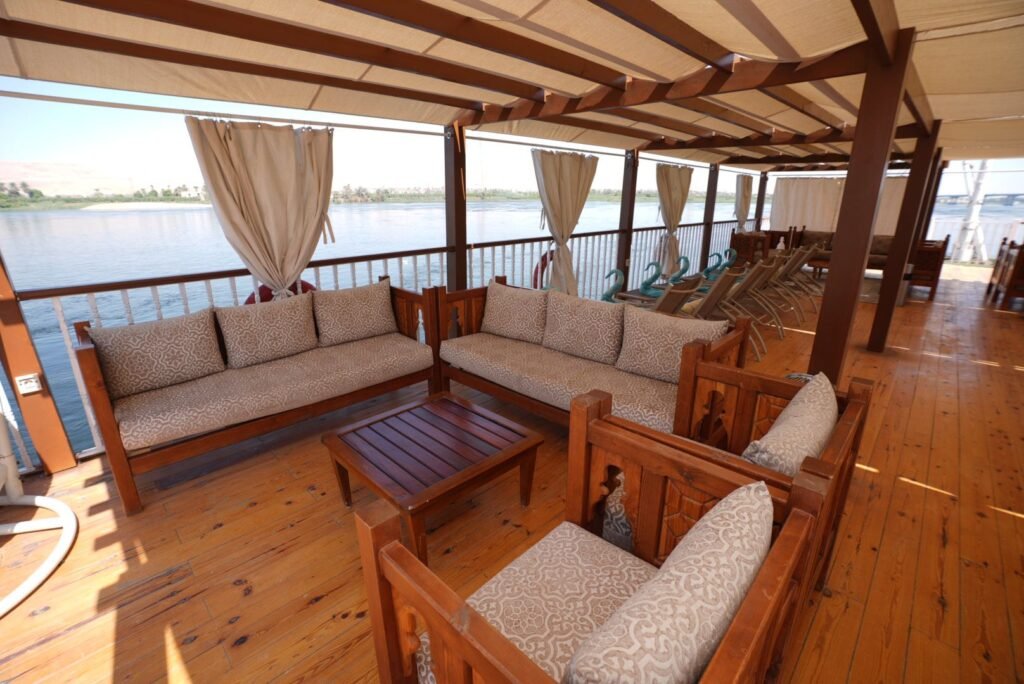
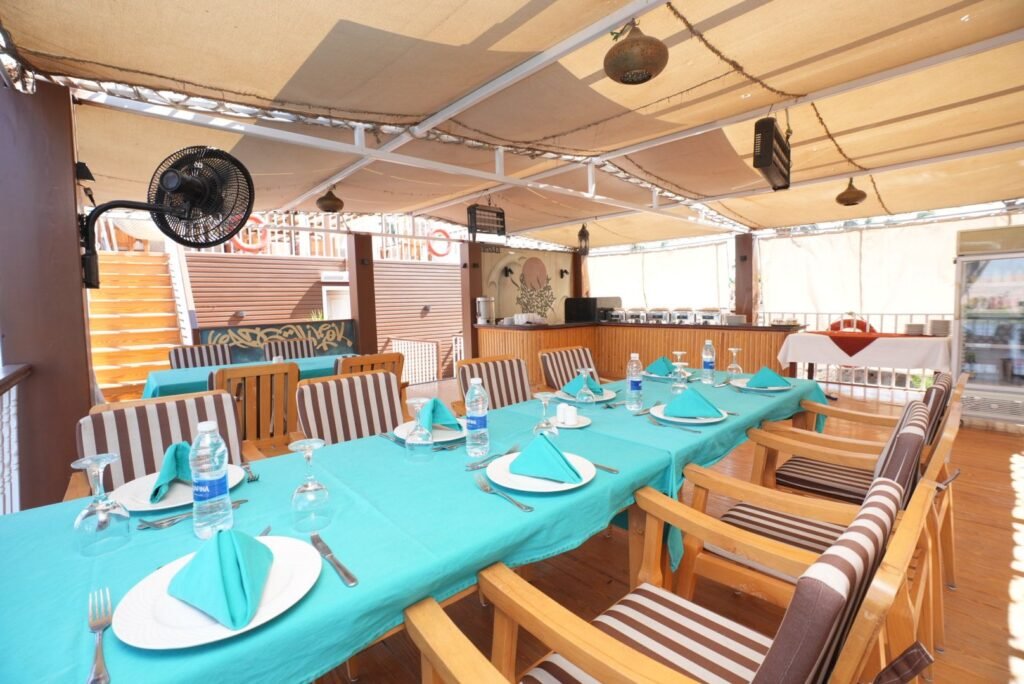
It is worth knowing where you will be practising. A dahabeya deck is flat, shaded and open on all sides. In November and March that is close to perfect. It is also outdoors, so wind and a cool morning are part of it. Bring something warm for the first session; people are always surprised by how cold the river is before the sun clears the bank.

A group, not a private journey

Places are sold individually and the boat has only a handful of cabins, so you travel with other people. For a retreat that is usually the point rather than the compromise — by the third evening the same eight or ten faces are around the table and the conversation has moved past where everybody is from.

If you would rather have the whole thing to yourselves, we do run this privately for a group that fills the boat. Tell us how many you are and we will price it.

Honestly

The temple mornings are early, because the tombs and Karnak are only pleasant before the heat and the coaches. A retreat does not exempt you from the Egyptian sun. If you came purely for the yoga and would rather sleep, you can — nothing is compulsory — but then you have paid for a boat and skipped the reason it is on this particular river.

Cabins on a dahabeya are compact, the stairs are narrow, and there is no lift, no pool and no spa. The food is fresh and largely plant-forward, cooked on board from local produce. If you have an allergy or something you cannot eat, tell us when you book rather than on day one — there is one cook and no second kitchen.

Who it suits

People who want the two things together and do not want to choose. Anyone who has done a retreat in a hotel and found it slightly airless. Solo travellers, who are the majority on this one and who find a boat of ten an easier room to walk into than a hotel of two hundred.

Less so if you want a private journey, a full spa, or a fixed daily schedule you can set your watch by. The river does not work that way.

Slower, or differently — always possible. Tell us how you like to travel and we will rebuild the day around it.

Before you book, it is worth knowing which months are kindest on the river — for a retreat practised outdoors it matters more than usual. If the boat is the part you are unsure about, here is what a dahabeya is like against a cruise ship, and which tombs are worth your three in the Valley of the Kings.

Trip Highlights

  • Yoga twice a day on the open deck — active at sunrise, slower at dusk
  • Three nights in Luxor first, so the boat days are rest rather than a second itinerary
  • Four nights under sail from Esna to Aswan on a dahabeya with a handful of cabins
  • Karnak, the Valley of the Kings, Hatshepsut, Medinet Habu, Edfu, Kom Ombo and Philae — all entrance fees in the price
  • An afternoon on a working farm on the West Bank, with tea and bread with the family
  • Fresh, largely plant-forward cooking on board, and swim stops at quiet sandbanks

Departure dates

We sail every Saturday from Luxor. Every date below was open when we last checked on 14 September 2026. Your cabin is confirmed in writing before you pay anything.

  • 19 September 2026SaturdayOpen
  • 26 September 2026SaturdayOpen
  • 3 October 2026SaturdayOpen
  • 10 October 2026SaturdayOpen
  • 17 October 2026SaturdayOpen
  • 24 October 2026SaturdayOpen
  • 31 October 2026SaturdayOpen
  • 7 November 2026SaturdayOpen
  • 14 November 2026SaturdayOpen
  • 21 November 2026SaturdayOpen
  • 28 November 2026SaturdayOpen
  • 5 December 2026SaturdayOpen
  • 12 December 2026SaturdayOpen
  • 19 December 2026SaturdayOpen
  • 26 December 2026SaturdayOpen
  • 2 January 2027SaturdayOpen

Saturdays continue weekly through October 2027 — ask for any date that is not listed. For a family or a group of friends we also charter the whole boat privately, on almost any date you like.

Tour Itinerary

You are met at Luxor airport and taken to your hotel on the east bank. The afternoon is yours: unpack, stretch out the flight, sit by the water. As the heat leaves the day we gather for a first gentle session — slow movement and breathwork, nothing demanding — and then eat together. It is a quiet start on purpose.

Morning yoga on the hotel terrace with the Nile below, an active practice to wake the body properly. Then the east bank: Karnak, the largest temple complex of the ancient world, where the hypostyle hall still makes people stop talking. In the late afternoon Luxor Temple, at its best when the light goes low and the columns throw long shadows. The evening session is slower — yin, and a long meditation.

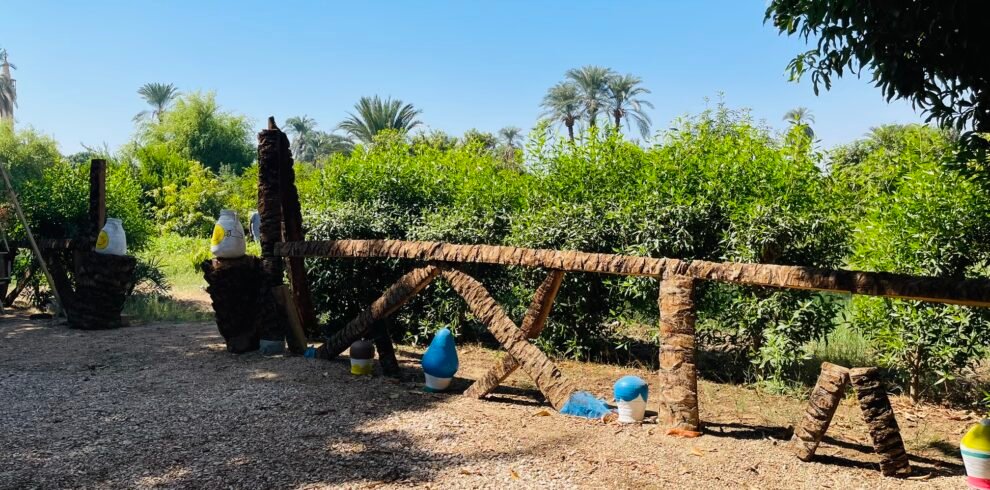
The West Bank belongs to the early hours. The Valley of the Kings first, while the rock is still cool and the painted chambers are quiet. Then Hatshepsut’s terraced temple against the cliff, and Medinet Habu, where the colour has survived as it has almost nowhere else. In the afternoon something different: a working farm among the sugarcane, tea with the family, bread from a mud oven. Back at the hotel for the evening practice.

After breakfast we transfer to the mooring and board the dahabeya, your home for the next four nights. She is small and wooden, a handful of cabins, and there is no engine noise at night. Lunch on deck as the crew raises the sails. In the afternoon the temple at Esna, sunk below the level of the modern town, its ceiling still carrying the zodiac. Evening practice on deck, then dinner under the stars.

Morning yoga on deck in the first light, before the anchor comes up. Edfu is the most completely preserved temple in Egypt: you walk in through a pylon still standing to its full height, and the roof is still on. The rest of the day is sailing — the bank slides past, herons lift off the shallows, and there is nothing you have to do. Evening meditation as the light goes.

A longer breath-focused practice this morning. Kom Ombo is the strange one: a double temple split down the middle, half for the crocodile god Sobek and half for Haroeris the healer. The museum beside it holds the mummified crocodiles found in the sand around it. We sail on through the afternoon and moor where the river widens and the desert comes down to the water.

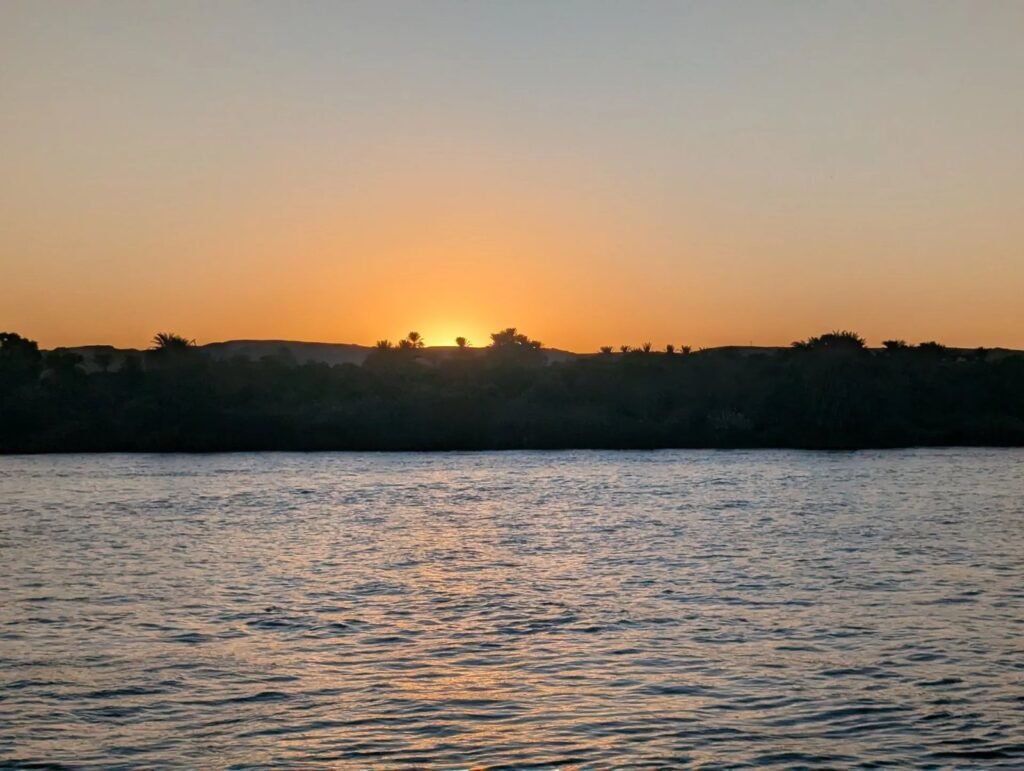
Philae sits on its own island and you reach it by boat. The temple of Isis was moved here stone by stone when the dam went up, and whoever chose the site chose well — it looks as though the goddess was deliberately set apart from the noise of the world. Back on board for the closing practice as the sun drops behind the dunes, then a farewell dinner with the crew.

Breakfast on board, then goodbye to the boat and the crew. Our private transfer takes you back along the Nile to Luxor for your onward flight. The road follows the river most of the way, which is a gentler way to finish than an airport at dawn.

Costs

The Cost Includes

  • 3 nights hotel accommodation in Luxor with breakfast
  • 4 nights full-board aboard a private sailing dahabeya
  • Daily morning and evening yoga and meditation with a dedicated teacher
  • All meals on board — fresh, largely plant-forward cuisine from local produce
  • Private licensed Egyptologist guide throughout
  • All entrance fees: Karnak, Luxor Temple, Valley of the Kings, Hatshepsut, Medinet Habu, Esna, Edfu, Kom Ombo and Philae
  • An afternoon on a working farm on the West Bank, with tea and bread with the family
  • All transfers in air-conditioned vehicles, including Aswan back to Luxor
  • Onboard crew service, taxes and service charges

The Cost Excludes

  • International flights to and from Egypt
  • Egypt entry visa (30 USD in cash on arrival for most nationalities, or an e-visa applied for in advance)
  • Travel insurance
  • Optional excursion to Abu Simbel
  • Hot air balloon over Luxor’s West Bank
  • Drinks outside of meals and personal expenses
  • Gratuities for the guide and crew
Do I need yoga experience?
No. The daily practice is built to be accessible to beginners and still ask something of people who have been practising for years. The group stays small so it can be adjusted to the people actually in it.
Is this private or a group?
Which entrance fees are included?
What is the food like?
Can we add Abu Simbel?
When are the yoga sessions?
What about payment, insolvency protection, visas and insurance?

Enquiry

Dr. Sherif Azab-Els reads and answers these himself, usually within a day. An enquiry costs you nothing and commits you to nothing.
Yoga Retreat on a Dahabeya — Sailing the Nile
From $3,010/ Adult

Need help with booking? Send Us A Message

German tour operator
Money protected
Twelve at most
A person, not a desk