
In short: West Bank in the morning, East Bank in the late afternoon. If you only have one day, do it in exactly that order – not the other way round. Here’s why, and what you can leave out.
Luxor is two towns, separated by the Nile. That was the plan three thousand years ago already: in the east, where the sun rises, people lived and made offerings to the gods. In the west, where it sets, they buried their dead. That division still holds today, and it’s the reason “east or west” isn’t a question of taste but of the time of day.
What’s on which side
East Bank. Karnak, the largest temple complex of the ancient world, and Luxor Temple in the middle of town. Plus the Luxor Museum, which is smaller and much better than its reputation, the Corniche along the river and the souk. Almost all the hotels are here too.
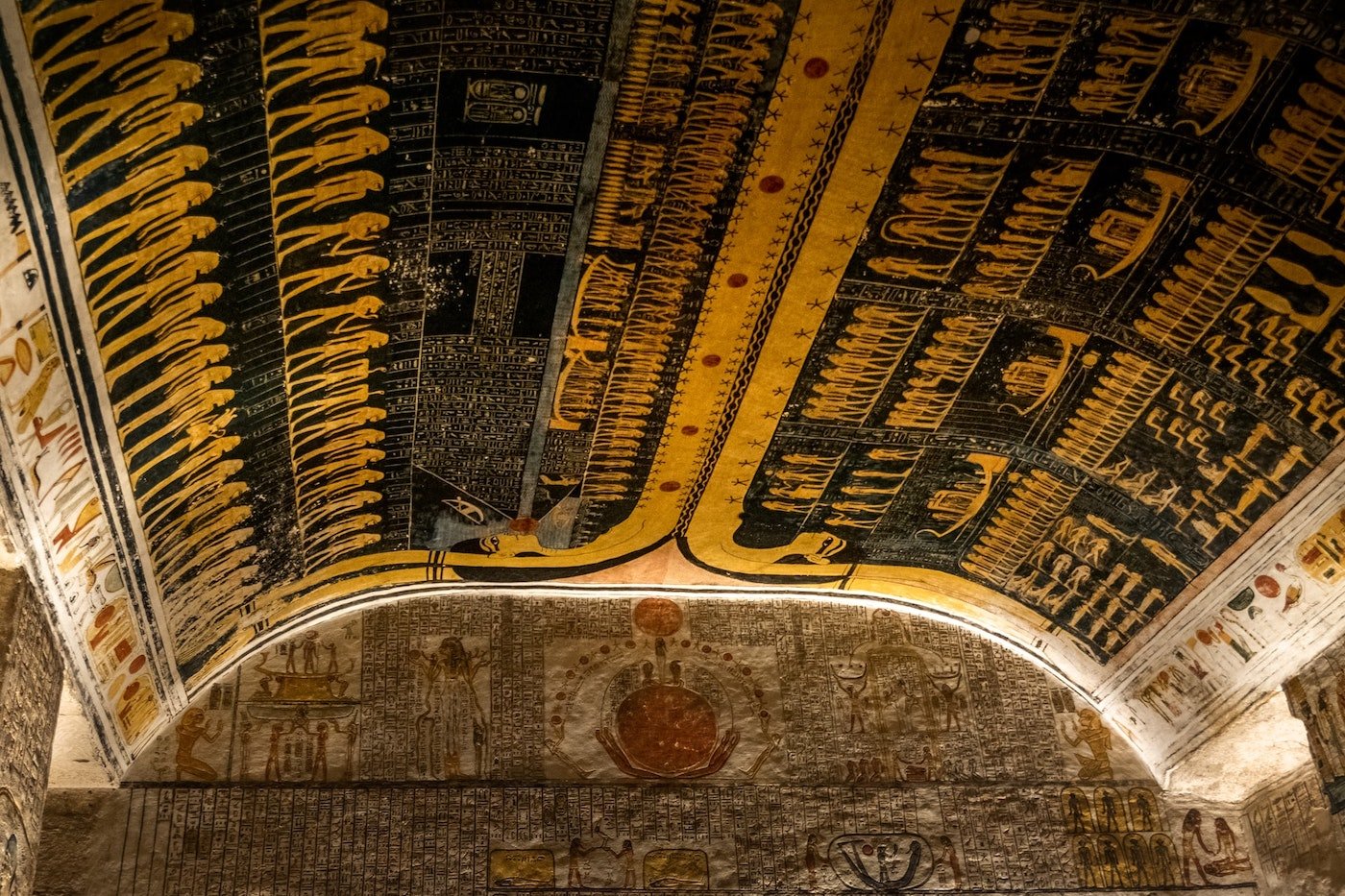
West Bank. The Valley of the Kings, Hatshepsut’s terraced temple, Medinet Habu, the Ramesseum, the Colossi of Memnon, the Valley of the Queens with the tomb of Nefertari, and Deir el-Medina, the village of the craftsmen who built all these tombs. In between: sugar cane, banana plants, villages, donkeys.
Why the West Bank in the morning
Three reasons, all practical.
- The heat. There’s almost no shade on the West Bank. The rock in the Valley of the Kings soaks up the sun and gives it back in the afternoon – by then the air in the tomb corridors is stagnant. From six to ten it’s pleasant; after that, it isn’t.
- The light. The reliefs at Medinet Habu and Hatshepsut come alive in low light. At midday the sun is directly overhead and the colour washes out to white.
- The coaches. Day-trippers from the Red Sea typically reach the West Bank between nine and eleven. If you’re at the ferry at six, you have two hours almost to yourself.
Why the East Bank in the afternoon and evening
Karnak is so big that shade inside it actually matters – and in the late afternoon it falls between the columns of the Hypostyle Hall instead of the sun beating straight down. Luxor Temple, on the other hand, is lit up in the evening and sits right in the middle of town: you can walk over after dinner. It’s the one place in Luxor where a second visit on the same day is worth it.
If you only have one day
Then the order is fixed, and less fits in than any brochure suggests.
- 6 to 10 am, West Bank: Valley of the Kings with three tombs, Hatshepsut, photo stop at the Colossi of Memnon.
- 10 am to 12 noon: either Medinet Habu – the most underrated site in all of Luxor, because the colour has survived there – or back for a break.
- Midday break. Not optional. Between twelve and three, nobody has any business being outside.
- 4 to 6 pm, East Bank: Karnak.
- After dinner: Luxor Temple lit up.
What falls by the wayside: the Valley of the Queens, Deir el-Medina, the Ramesseum and the museum. That’s the honest price of a single day. If you try to fit everything in, you end up seeing nine places and remembering none of them.
Two days: the split we recommend
Day one, West Bank: Valley of the Kings, Hatshepsut and Medinet Habu in the morning. In the afternoon, not another temple but the other West Bank – the fields, a village, a family. That’s where the things happen that guests still remember a year later.
Day two, East Bank: Karnak early in the morning, while the cruise ships are still having breakfast. Then the Luxor Museum through the midday heat. Luxor Temple in the late afternoon, followed by the souk.
With three days, add the Valley of the Queens with Nefertari – expensive, time-limited, and the finest painting in Egypt – and Deir el-Medina, where you see how the people lived who cut the royal tombs.
The mistake almost everyone makes
Treating the West Bank as a checklist. It is the more interesting side, but not because of the number of temples. Between the monuments lies farmland where the same crops have grown for thousands of years, and villages where the grandsons of the men who dug for Howard Carter live. If you only drive from car park to car park, you see none of it.
That’s why we deliberately build something into our Luxor days that isn’t a temple: an afternoon with a farming family or a bike tour across the West Bank, past sugar cane, canals and tomb entrances where no coach ever stops.
And the ferry?
There are two ways across the Nile: the passenger ferry, which costs a few Egyptian pounds, leaves every twenty minutes and has you sitting among commuters, bicycles and shopping bags – and the bridge to the south, which every car has to use, a detour of around twenty minutes. If you’re on foot or on a bike, take the ferry. It’s the best part of the day and costs next to nothing.
In a nutshell
- West Bank in the morning, East Bank in the afternoon and evening. Never the other way round.
- One day is enough for the Valley of the Kings, Hatshepsut and Karnak – no more.
- Medinet Habu is the most underrated site in Luxor.
- The midday hours aren’t spare time; they’re a break.
- In the Valley of the Kings your ticket covers three tombs – here’s which ones are worth it.
Our day trip from the Red Sea follows exactly this order: Hurghada to Luxor. If you’re staying several days and want to continue to Aswan afterwards, take the dahabeya from Esna.
You get both in one go with four days in Luxor – the East Bank at two different times of day, the West Bank early in the morning. Just the tombs and Hatshepsut: the West Bank morning.
Auf Deutsch lesen: Luxor: Ostufer oder Westufer? Was wann Sinn ergibt